
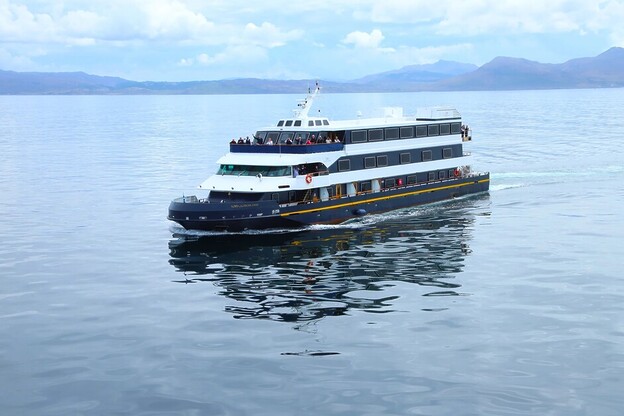
Michael Edwards luxuriously investigates the Nessie legend on Hebridean Island Cruises’ The Lord of the Highlands.
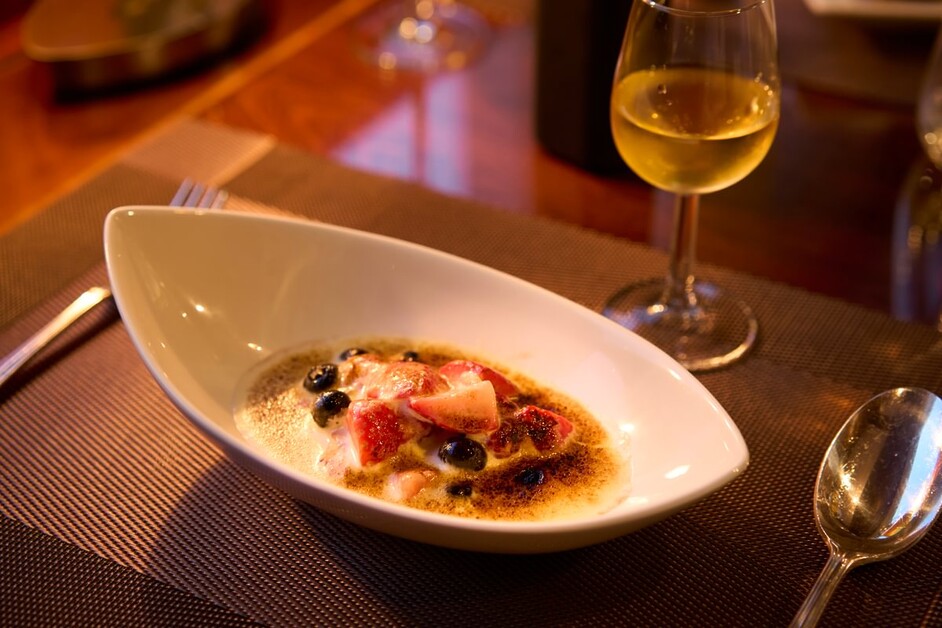
The Lord of the Highlands hosts a floating country house party with flashes of tartan. Waitresses deliver canapés and champagne, decanters of whisky await in the dark wood cabins, and a library of books on Scottish culture, history and wildlife invites. Whilst an array of 26 single-malt whiskies sits on the bar’s shelves. Below decks, chefs in the galley create gourmet cuisine for fortunate guests.
We even have our own resident historian and author aboard; David Barnes is available for chats throughout the day. One historian to some 30 guests is an impressive ratio, particularly as we also have our guide Colin, who is a fount of knowledge on all things Highlands and Islands.
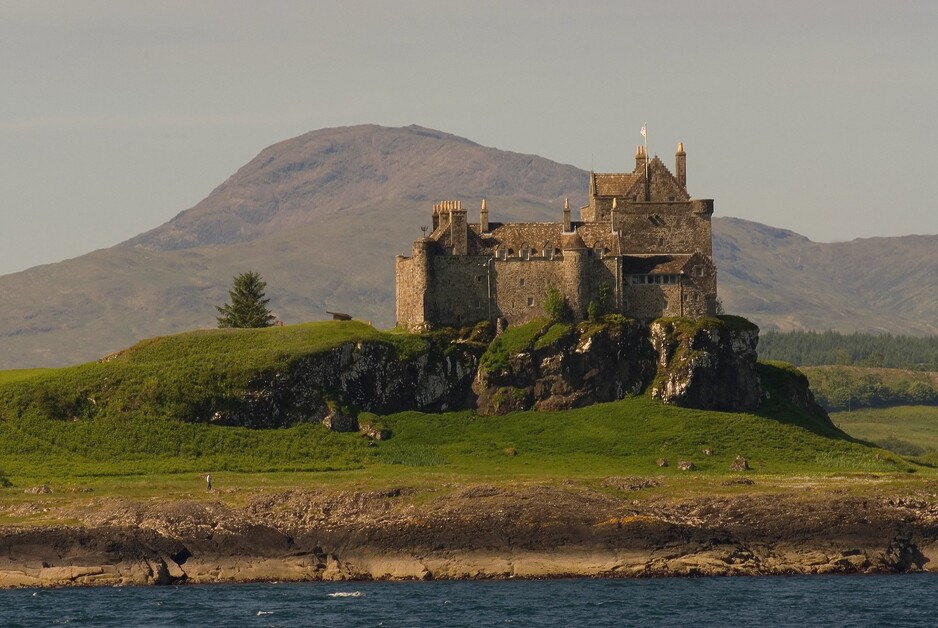
On excursions to Duart Castle, Mull Cheese Farm, Glenfinnan Monument, Culloden Battlefield and Visitor Centre, Colin dashes ahead to pay admissions and open a tab for us at cafes. Every cruise should have a Colin.

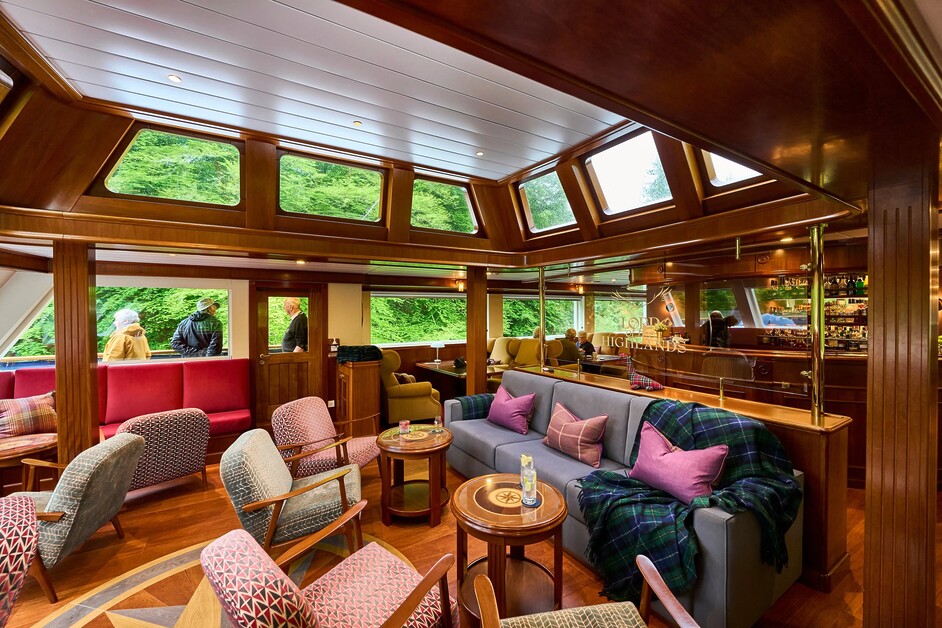
All-inclusive includes these excursion costs as well as breakfast, red and white wine with a three-course lunch: plus, wines, dessert wine and port with a three-course dinner.
As an early riser, our historian David positions himself by the ship’s beverage point, where he has his first double espresso of the day and somehow resists the selection of shortbread biscuits. Following his presentation on Columba bringing Christianity to the tiny island of Iona and then Western Scotland, I posit my theory on the Loch Ness legend. David had told us that the first reference to Nessie was written a century after Columba’s walk northwards to spread the Christian word.
“Could Nessie have been a symbolic representation of all the opposition and dangers Columba faced on his travels?” I ask.
“Possibly. But don’t forget how intimidating 22 miles of an immense inland sea could be on a foreboding day for Dark Ages folk who rarely walked more than a few miles from their home. Is it any surprise that their imaginations may have become a little overactive? More recently, the last sighting of Nessie, claimed back in the 1990s, followed an exceptionally lengthy lunch …”
Our conversation continues over breakfast, porridge cooked to order for David, though he declines the offer of an accompanying serving of whisky. I opt for a cooked breakfast which, alongside the regulars, includes black pudding and potato scone.
“It’s best for me when we sail from Oban,” admits David. “There’s a chronological order to starting with early Christianity, followed by Bonnie Prince Charlie’s Jacobite Rising, Culloden, the Highland Clearances and onto the revival of Scottish tradition.”
We begin with a spectacular sail-away from Oban, Scotland’s seafood capital, bizarrely crowned with the amphitheatre of McCaig’s Folly. Sailing towards Ben More, Mull’s only Munro, the mountain is still snow-capped after a harsh winter.
At Tobermory’s crescent-shaped bay, where harbour porpoises leap and plunge, we dip in and out of craft shops and galleries. On the cold, craggy edge of Europe, the Hebrides draw creative artists and crafters.
Winds verging on gales combine with rough seas to prevent the sailing of the ferry to Iona. Instead, David tells us that this tiny island and its abbey have a unique spiritual aura. Whilst the east of England and Scotland endured the Dark Ages, Columba’s prayers, monks’ hymns and learned scribes’ manuscripts brought the light of Christianity to the west of Scotland.
Sailing for the mainland, we enjoy a cruise past the 10-mile-long Isle of Lismore as we enter the sea-loch of Linnhe, giving spectacular views of Glen Coe. A mooring at the Corpach Basin launches us on an excursion to the Glenfinnan Monument commemorating Bonnie Prince Charlie’s landing in Scotland and a visit to the Glenfinnan viaduct featured in the Harry Potter movies.
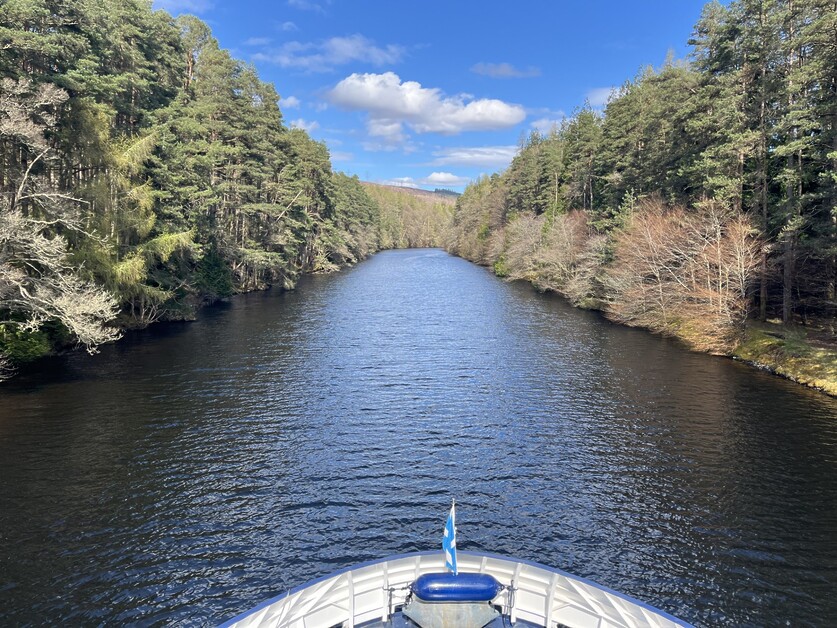
Over evening cocktails, Captain Jim, introduces us to the Caledonian Canal. As with so many government projects there is a sense of the inevitable. Twelve years late and nearly thrice its estimated cost, the canal was virtually obsolete by completion. New steamships were too large for the canal and after the end of the Napoleonic Wars, the seas were safer.
As we sail through the idyllic Lagan Avenue, with an otter splashing ahead, it seems that perhaps the canals linking Loch Lochy, Loch Oich and Loch Ness should always have been destined for leisure. The efforts of early 19th-century labourers, providing their own spade – and paid with beer, coin and whisky – were not wasted.

David Barnes made the point that the Caledonian Canal was also a social project to provide labour for men cleared from the Highlands by landholders extending their profitable sheep farms.
Our visit to the Culloden Battlefield and Visitor Centre, detailing how the defeat of the Jacobites barely lasted an hour, through a brutally realistic film, emphasised that the rebellion was utterly crushed.
Yet, the shock of the rebellion to the English government prompted significant changes. Laws banned bagpipes, Gaelic and tartan. To control the clans Fort William and Fort Augustus were built, the first Ordnance Survey Maps were drawn to chart the territory whilst improved roads were built to rush troops to trouble spots.
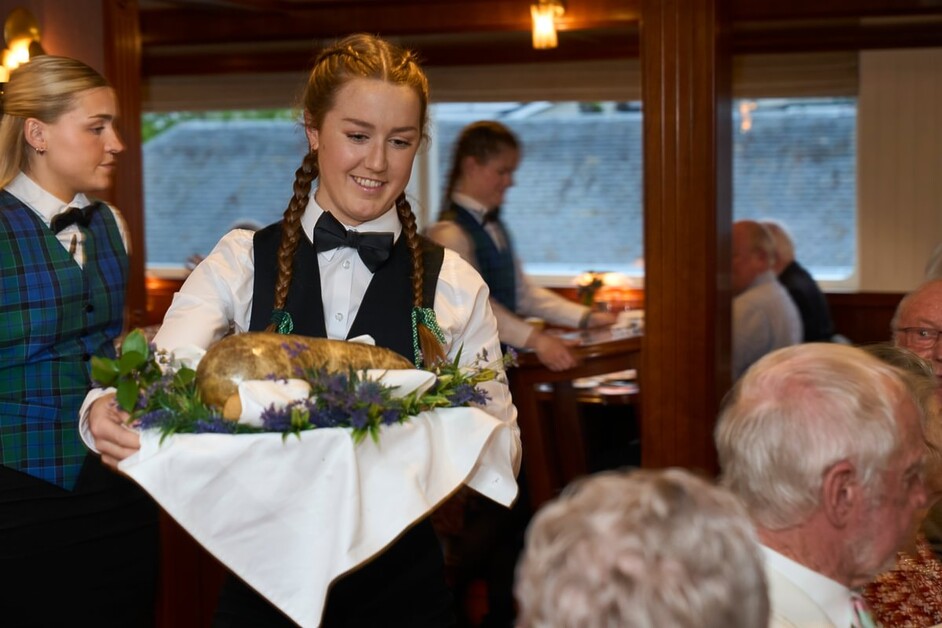
Our cruise showed how Scottish identity had slowly recovered. On Mull, our evening entertainment had been “The price of a pig”, “My favourite dram” and “Banish misfortune” played by Hannah and Soren who tour the world with their Gaelic music. At Corpach Basin, Gaelic entertainers had given us a Highland Fling and Gaelic songs. Then for our Gala Dinner, the haggis and been piped in and welcomed with the Rabbie Burns address.
Saying farewell to the crew at Inverness, many guests expressed their desire to return to Scotland for a voyage on The Lord of the Highlands’ sister ship, Hebridean Princess, which voyages further into the Scottish islands. She is a ship with such an impressive pedigree that twice she was hired by the late Queen Elizabeth ll.
Tell Me More About The Lord Of The Highlands With Hebridean Island Cruises
Hebridean Island Cruises 2026 prices for Lord of the Highlands start from £3,281 per person for a six-night Autumn in Caledonia cruise from Oban to Inverness departing 17th October. Price includes all meals and drinks, excursions, port taxes and transfers between Oban and Inverness.
T: 01756 634933
E: reservations@hebridean.co.uk
If you enjoyed this review, why not check out these similar posts:
 Grant Arms Hotel. Enjoy a superb Scottish Welcome in Grantown.
 Fairmont St Andrews Hotel. A glorious Scottish welcome at the home of golf.
 All Aboard the Jacobite: A Magnificent Steam Train Journey Through the Scottish Highlands
 Isle of Eriska Restaurant. Discover a excellent restaurant on its own Scottish Island


