Mark Nicholls Suggests What to do and where to go when you spend 48 hours in Kolkata, the City of Joy.
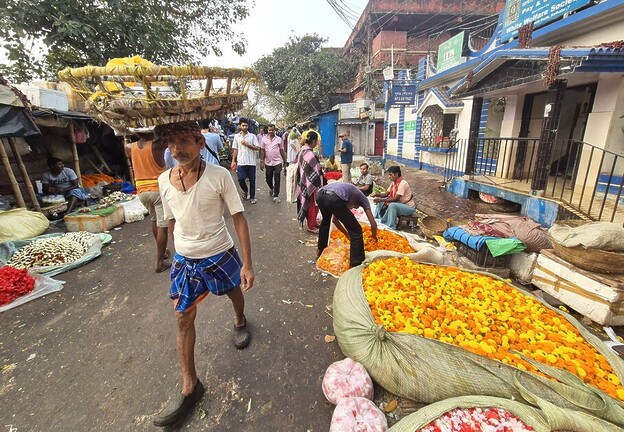
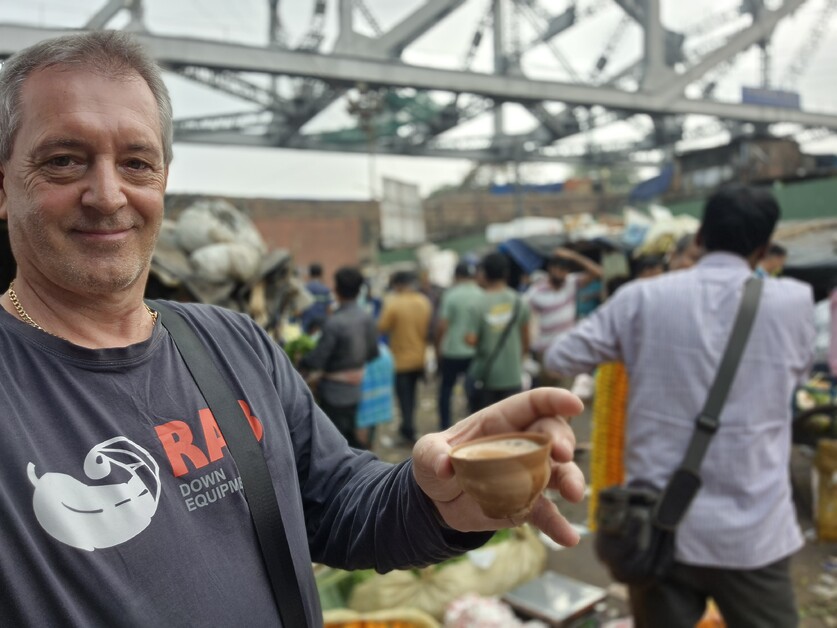
If you wander down to the Hooghly River in Kolkata soon after sunrise, in the cooler air beneath the mighty Howrah Bridge, you’ll be met by floral blooms of every shade.
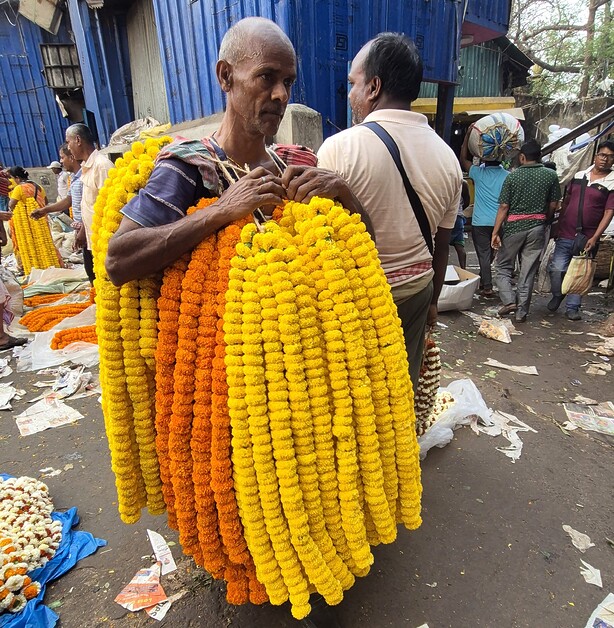
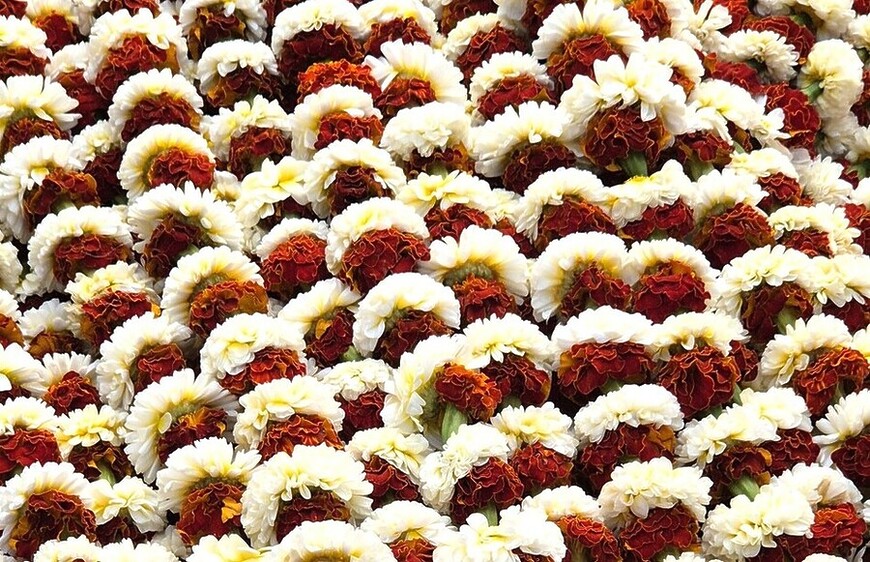
Yellow and orange marigolds dominate, but there’ll be stalls selling roses, carnations, chrysanthemum and gladioli, plus green foliage to complement the bunches.
Here, beside the latticed ironwork of the landmark river crossing is Mullick Ghat, the city’s famous flower market.
For a few hours every day, often before the rest of the city awakes, the embankment is transformed into a colourful floral haven.
Bathing Ghats
This open area beneath the Howrah Bridge, which dates from 1943, is crammed with piles of orange and yellow marigolds that are destined for temples and shrines, family homes, hotels and restaurants and all being carefully sorted and sold by vendors and ferried away on the heads of coolies.
Other workers carry long strands of marigold garlands along a thoroughfare, where further stalls lead off in alleys down to the river.
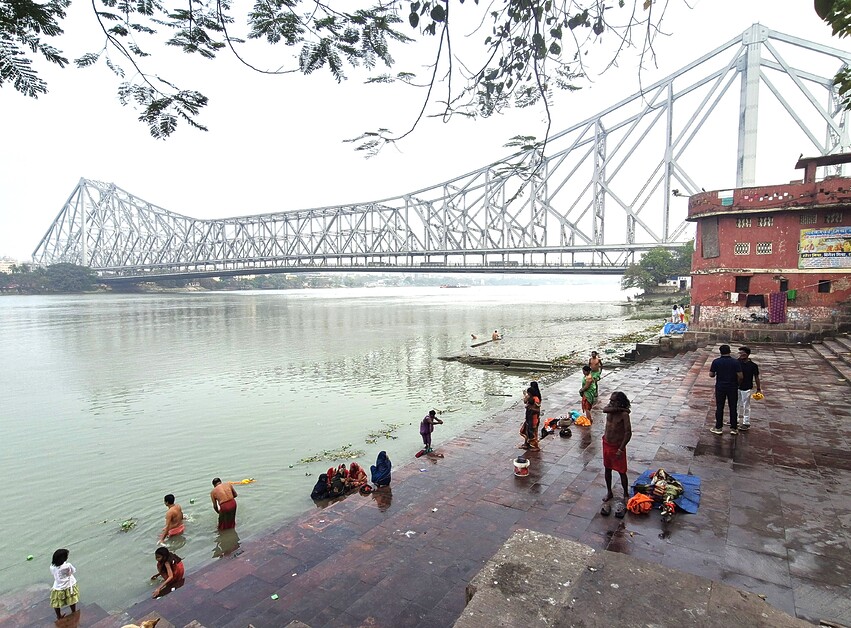
Behind the stalls are ghats (stepped embankments); at the Chola ghat there is a waterside temple where people gather to bathe, wash clothes and perform acts of worship.
Blooms and Garlands
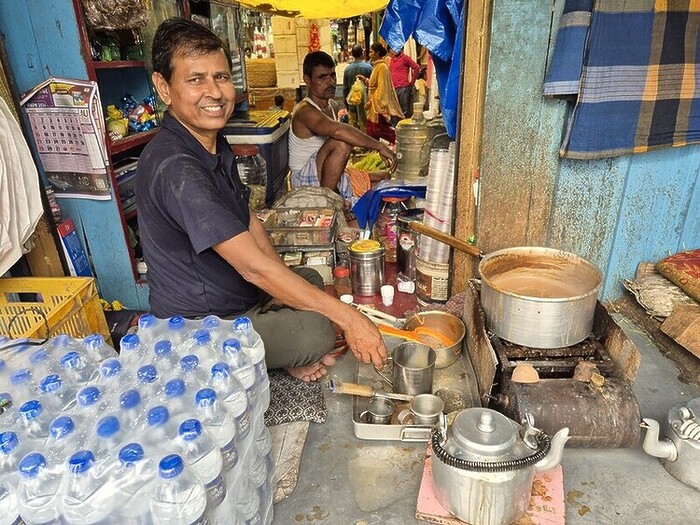
Walking through Mullick Ghat is a lovely way to spend a couple of hours when the city is still dormant and the air cool; admiring the blooms, watching traders buy and sell, and stopping for a cup of masala chai served in an earthenware pot.
Kolkata, or Calcutta as it was known until the mid-1990s, was once the capital of British India and has a long colonial link that is still visible today in its architecture.
There’s a lot to see in this megacity of more than 22 million people, a city made famous in Dominique Lapierre’s book City of Joy and the subsequent film of the same name starring Patrick Swayze.
But if you’ve only got a couple of days, wandering around the central areas on foot is an ideal way to take in the must-see landmarks.
Street Food
A slow walk back from Mullick Ghat along Strand Road leads to BBD Bagh where colonial style architecture dominates the main square.
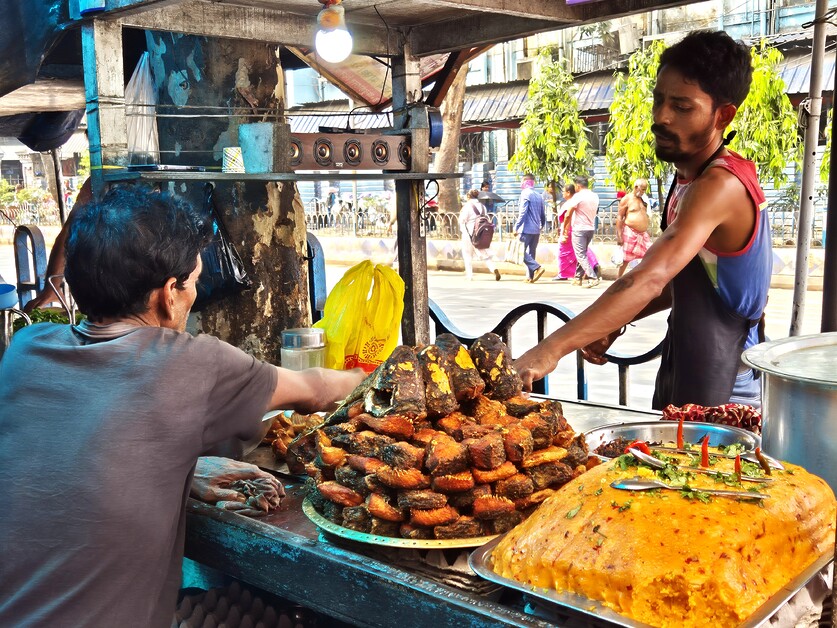
In side streets, the city’s street food scene thrives. Hare Street is a popular haunt where you can savour anything from vegetarian curry and chapatis, momos, biryani and even Kolkata-style fish and chips.
All is freshly cooked by street vendors who enjoy a loyal clientele from early morning until night fall.
As you head away from BBD Bagh (named after three Independence activists named Benoy Badal and Dinesh), the road leads to the impressive St John’s Church tucked away in gardens.
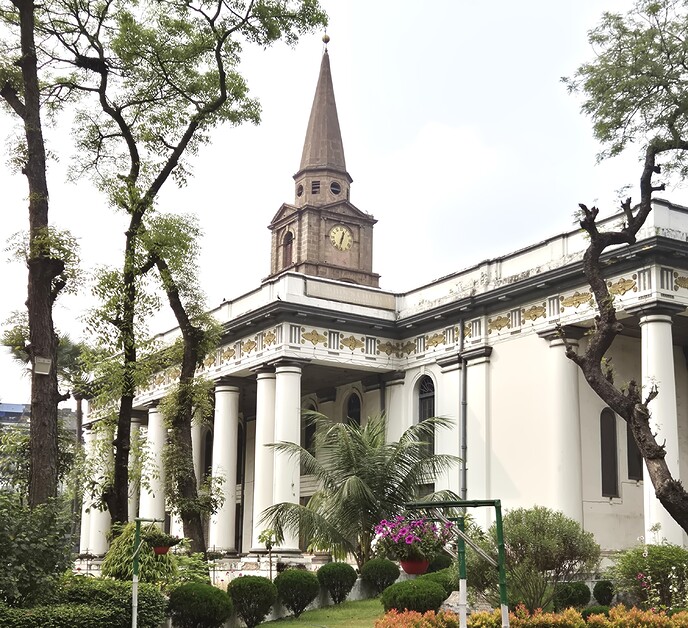
Built in the 1780s and one of the first public buildings erected by the East India Company, it is instantly recognisable with its tall spire and pillared facade.
Within the grounds are memorials and graves of figures and events that have shaped India over the centuries.
Among them, at the end of a path in the far corner, is the grave of Job Charnock who died in 1692. He was the founder of the East India Company, which saw the early rise of Calcutta as a trading hub and eventually led to the transformation of India under British rule.
Black Hole
Not far away is another sombre edifice that recalls an event India prefers to forget, the infamous Black Hole of Calcutta incident.
The Black Hole, as it became known, was a small dungeon in Fort William, which had been constructed to protect the trade interests of the East India Company at a period of heightened tensions in the mid-1750s.
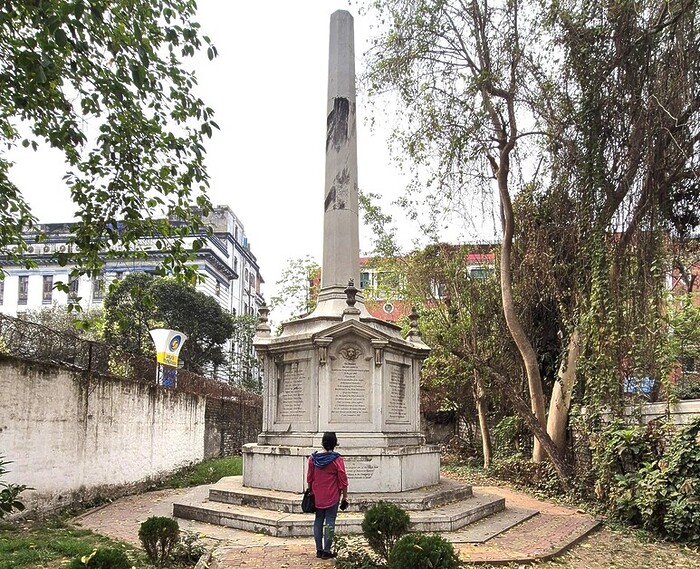
On the night of June 20, 1756, troops of the Nawab of Bengal held British prisoners overnight in the stuffy and cramped conditions that saw many of those detained die from suffocation or heat exhaustion.
The monument, which lists 123 fatalities, initially stood in a corner of BBD Bagh when it was still known as Dalhousie Square but in 1940 Indian nationalists demanded its removal which saw it discreetly re-erected in St John’s Church yard.
Green Lung
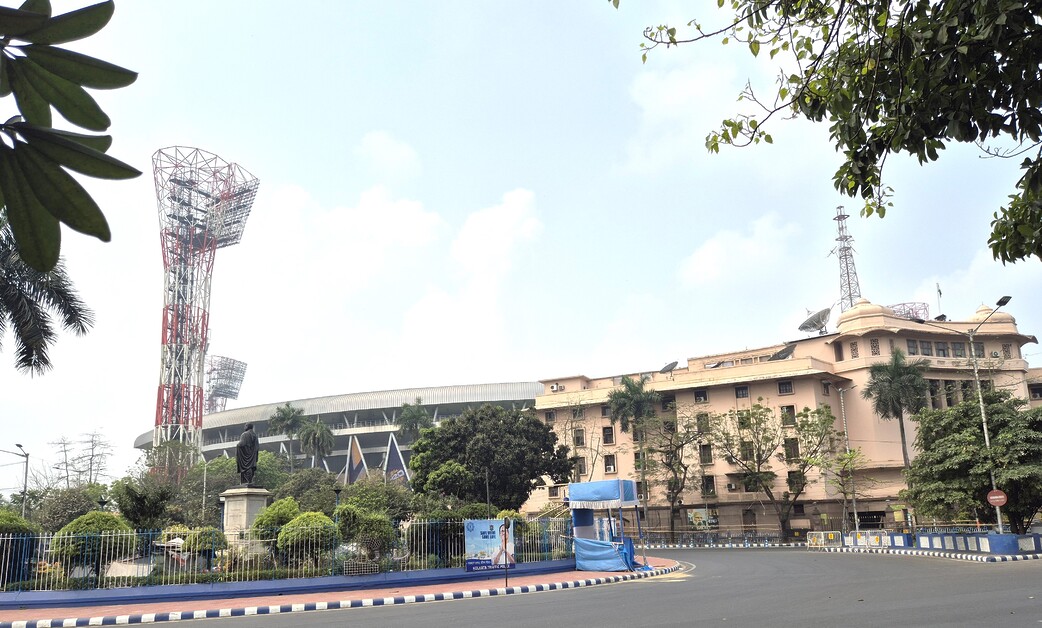
As you wander further along, the floodlights of the Eden Gardens cricket ground loom into view.
It stands on the edge of a massive area of grassland, the city’s green lung known as the Maidan, where every day from dawn until dusk dozens of casual cricket matches are played as young Indians emulate their sporting heroes.
Eventually, Jawaharlal Nehru Road – originally known as Chowringhee Road and one of Kolkata’s main thoroughfares – lead towards an area of busy side streets and alleys.
Beneath porticoes and makeshift bamboo stalls all kinds of wares are on offer from fashionable clothes to belts and souvenirs, books and fruit juice stands.
You are now in the famous Chowringhee district and as you fall deeper into this maze of side streets the fruit and veg markets take over, while in nearby Hogg Street is a covered market where butchers work on cuts of meat.
Hand-Hauled Rickshaws
As street hawkers and beggars mingle with shoppers, the crowds feast on the street food, buy fruit and veg, or textiles, toys, meat and fish.
It is easy to spend hours wandering around these busy streets where the produce is simply glorious: vivid red onions, limes, sticky dates, melons, grapes, oranges and pomegranates and juice vendors close by, squeezing every last drop out for a natural and refreshing drink. Elsewhere, delicious okra sizzles in a pan.
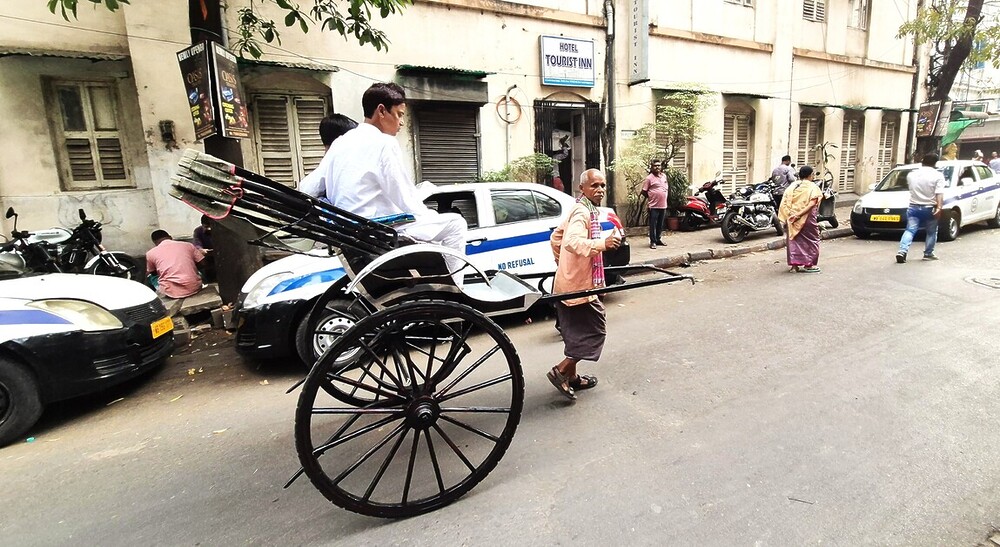
Further on is Sudder Street, once the centre of backpacker Kolkata where you find the moneychangers, tourist stalls and cheap hotels.
It is also in this part of Kolkata that you will still see hand-hauled rickshaws alongside yellow Hindustan Ambassador taxis, auto-rickshaws, three-wheel pedalled goods carriers, and cycle rickshaws.
Kati Rolls
On your second day, head further south along Jawaharlal Nehru Road towards Park Street, which has an altogether different ambience to the intensity of Chowringhee.
The street stands are less crowded and sell books, cigarettes, and perfumes while the cafes are sedate and charming where you are more likely to find an affluent Indian family dining on a chicken burger, than a backpacker tucking into a Thali.
Here are cafes such as Flurys and bakeries selling croissants and wraps; or restaurants like Peter Cat serving a blend of Indian and Continental cuisine.
You can order beer and coffee too but also pause to taste the kati rolls Kolkata is famous for – chicken tikka, cheese, egg or veg, wrapped in a flatbread and spiced with chillis and red onion from stalls such as Kusum’s Rolls.
Mother Teresa
This area is also where Mother Teresa (1910-97) established the Missionaries of Charity in 1950 as she led a group of nuns working to support dying and destitute people in Calcutta.
The Mother House can be visited on AJC Bose Road not far from Park Street and this is where Mother Teresa was buried on 13th September 1997 after her State Funeral service.
The work of the Catholic nun and her sisters for the poor of Kolkata over the second half of the 20th century eventually saw her attain sainthood in 2016 as St Mother Teresa of Calcutta.
Today, the nuns still continue to work for orphaned children and the city’s less fortunate souls.
Victoria Memorial
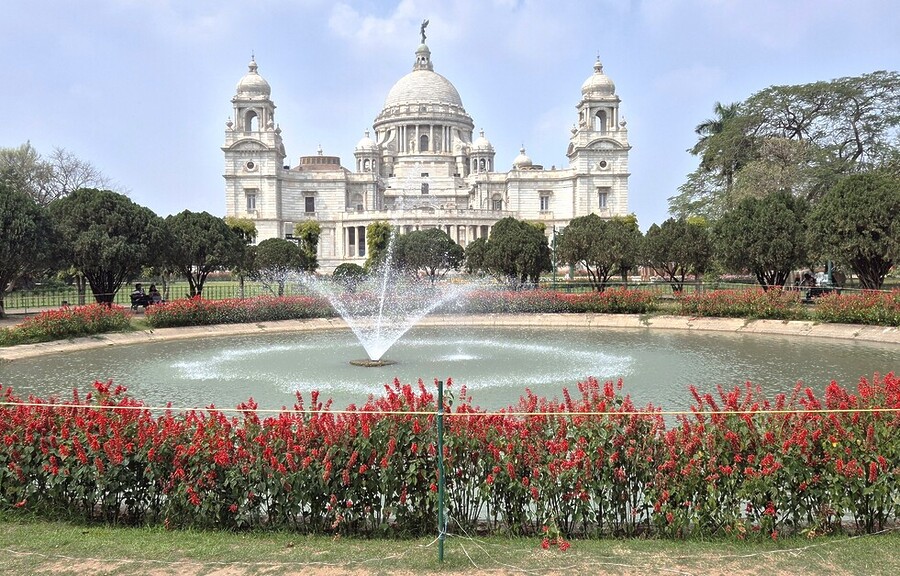
At the far end of the Maidan is one of Kolkata’s unmissable sites, the marble monolithic masterpiece of the Victoria Memorial, raised in memory of Queen Victoria who reigned from 1837 until 1901, and was also Empress of India.
Commissioned by Lord Curzon, it was constructed between 1906 and 1921 and opened by the then Prince of Wales, who later became Edward VIII.
The monument is set amid gardens and fountains, with borders lined with dahlias and red salvias and a statute of the Queen on her throne on a plinth in the middle of the pathway leading down to the white-domed Memorial.
Inside, there are proclamations from Victoria written in several languages alongside displays recognising major Indian figures; from pro-Independence campaigners and freedom fighters through to those who helped shape a changing India.
Round off your 48 hours in Kolkata with a sunset river cruise, picked up on the jetties of Strand Road and taking in the stretch of river linking the Howrah Bridge out towards the newer cantilevered Vidyasagar Setu, which opened in 1992. There are great views across the city from the Hooghly.
Tell Me More About 48 Hoiurs in Kolkata
Eating: Dine on the street food of Hare Street or Chowringhee, or for a more relaxed ambience take in the cafes, bars and restaurants around Park Street, such as Peter Cat and Flurys, or Kona Dukan in BBD Bagh for breakfast.
Accommodation: Central Kolkata has a number of mid-range hotels, including the Peerless Inn .
Top tip: Take your time strolling Kolkata and enjoy the different and contrasting ambience of Chowringhee, Park Street, the Maidan and Mullick Ghat.