
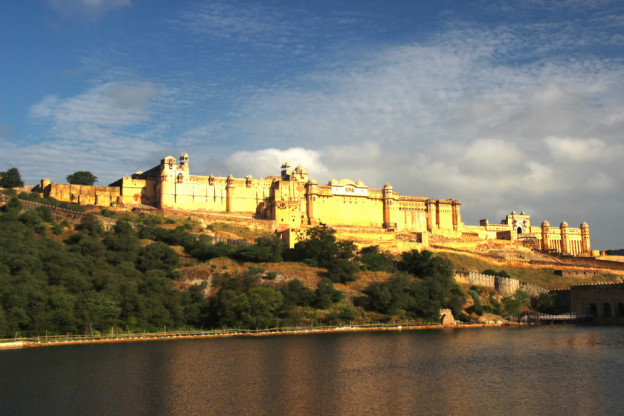
This is the first of a two-part story about Anthony’s first visit to India starting with a seven-day coach tour in the India Golden Triangle followed by four days in Shimla.
The India Golden Triangle refers to the three cities in the Northern third of India which have some of the most iconic sites and locations in the world including, of course, the Taj Mahal in Agra and others in New Delhi and Jaipur.
Visually India is amazing and it’s not surprising that over many years the Tourist Board advertising has relied on stunning colour photography of many sights and scenes using minimal words and currently just the one: “Incredible”!
For me, this was a “double first” as it was also the first time I have been on a coach trip with an organised group. As a newcomer to India I found that “coaching” around the India Golden Triangle the three cities of India’s Golden Triangle was the ideal way to cover it.
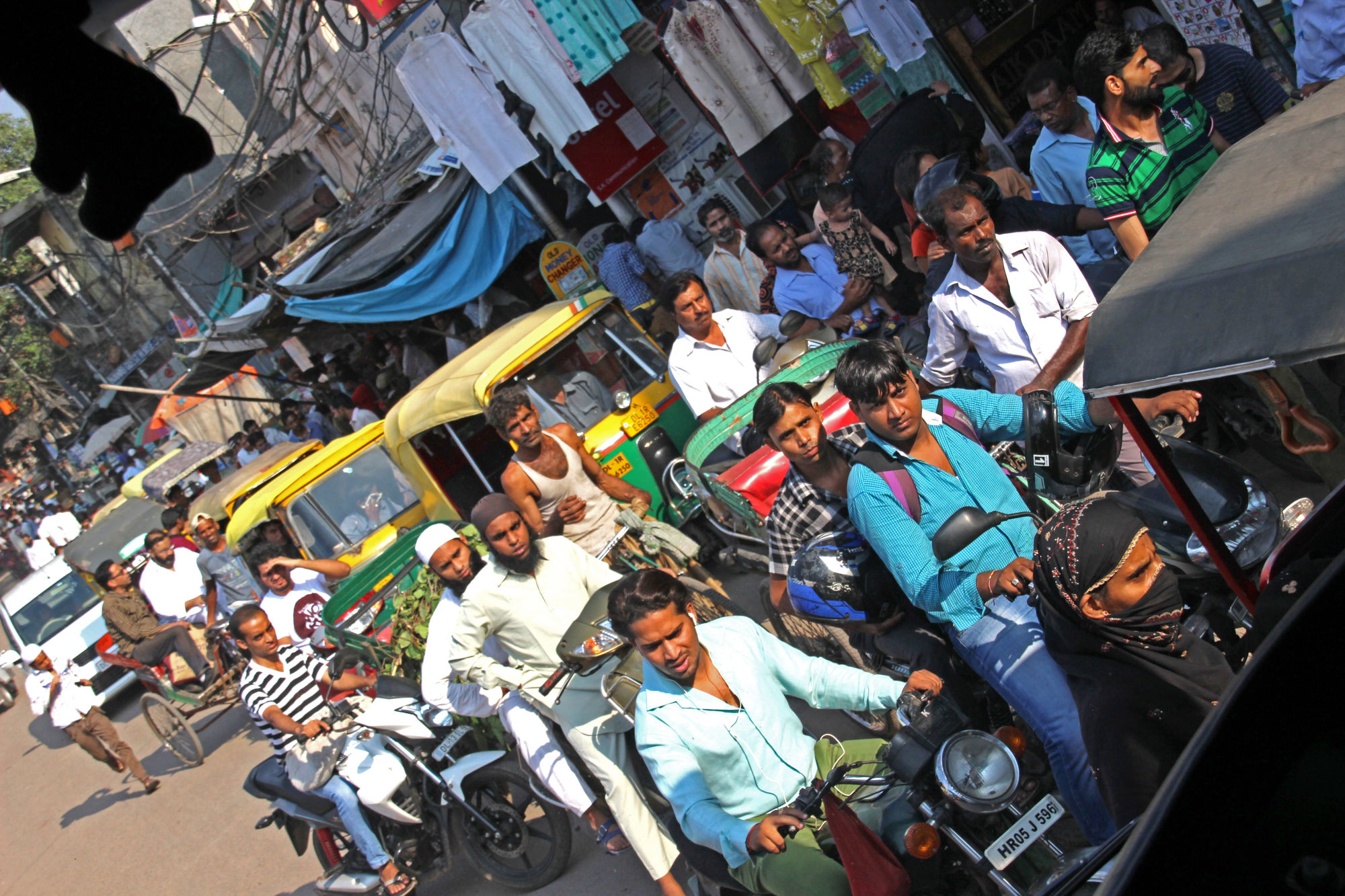
The round trip is about 280 miles and everything was door to door from arrival at Delhi direct from London Heathrow, to site entrances with our driver coping with some the most manic traffic and driving I’ve ever seen. A vast kaleidoscope of images and places including pretty girls with long flowing hair and gowns, side saddle on scooters just like Rome in the 1960’s.
A crucial aspect of organised guided trips is the quality of the guide. Our guide, Hamid Shah, always seemed to be supplying the right amount of historical and cultural detail – neither too much nor too little – all delivered with a wry sense of humour and impeccable English. He kept us all on time and, on the road and booked ahead for pit stops with Western facilities for a light lunch and optional cold beers. Not all these things are universally available.
New Delhi
As well as the forts, palaces, temples and gardens one can be immersed in a teeming mass of people, particularly in New Delhi where the population has risen by around 700,000 in the last 12 months to just under 18 million. It has been estimated that there 51 births a minute in all India. So “people watching” in the cities is fascinating with all the street markets, food stalls, ox carts and, of course, quite placid cows roaming around, some of which look as if they’ve been groomed.
Delhi succeeded Calcutta as the Capital in 1911 (renamed New Delhi after Independence in 1947) and , away from the crowds, there is a large area of wide roads, government buildings, gardens and a war memorial, the President’s House, Parliament House and the India Gate with plenty of sky with occasional small hawk like birds flying around. Sometimes described as the Lutyens area after the English architect Edwin Lutyens, who designed it in 1915, it’s ideal for a drive around in a coach.
Of course, there are other ways of getting around Delhi: Hop-on Hop-off buses, cheap taxis with attractive day hire rates, and an extensive modern rail “Metro” overground www.delhimetrorail.com There are also Tuks Tuks and an abundance of rickshaws both pedal and motorised.
Chandni Chowk is both the main marketplace and a vast experience of everything in an Indian city. First established in 1650 the area was divided by canals and includes temples, residential areas with some large mansions and halewis as well as the country’s largest wholesale and general street market with countless food stalls.
Provided you ask permission, people photography is no problem – you could visit Chandni Chowk every day for a month and still find new images to grab. Within the area is the most important Mosque in India the Jama Masjid. To get in it’s necessary to park your shoes with a few hundred other pairs and men in shorts are issued, on loan, a wrap round skirt to below the knees – yet another photo opportunity.

The B’hai Lotus Temple, completed in 1986, is the seventh and most recent temple of the B’hai faith that embraces all religions. The gardens and fountains provide a quiet haven after round the clock street life of the markets and manic traffic. www.bahaihouseofworship.in
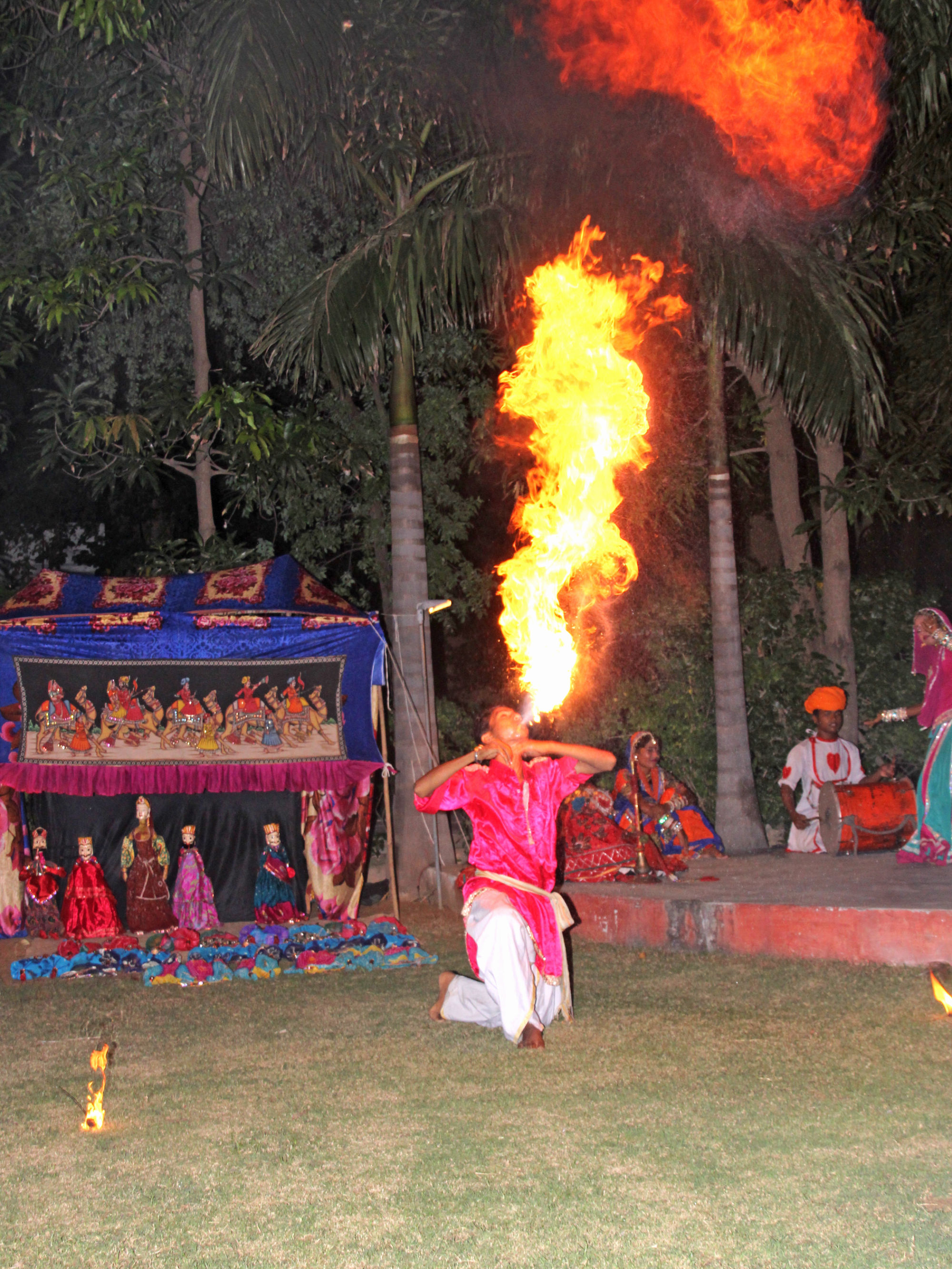
There’s a very different experience at the Kingdom of Dreams a nightspot near our hotel where Bollywood meets Las Vegas. Extravagantly over the top: it includes a large theatre, casino, many food halls and mini-pavilions One section is called Culture Gully under a vast blue sky starry ceiling. There’s a show business side to modern Indian culture – at least 20 films have been shot on location in Chandni Chowk. www.kingdomofdreams.in
Agra
As well as the Taj Mahal, the Red Fort in Agra is also a world heritage site, and they are both linked by the Yamuna river and each of these great icons can be photographed from one to the other. As enthusiasts know, the light at dawn and dusk is different and invariably better than midday light.
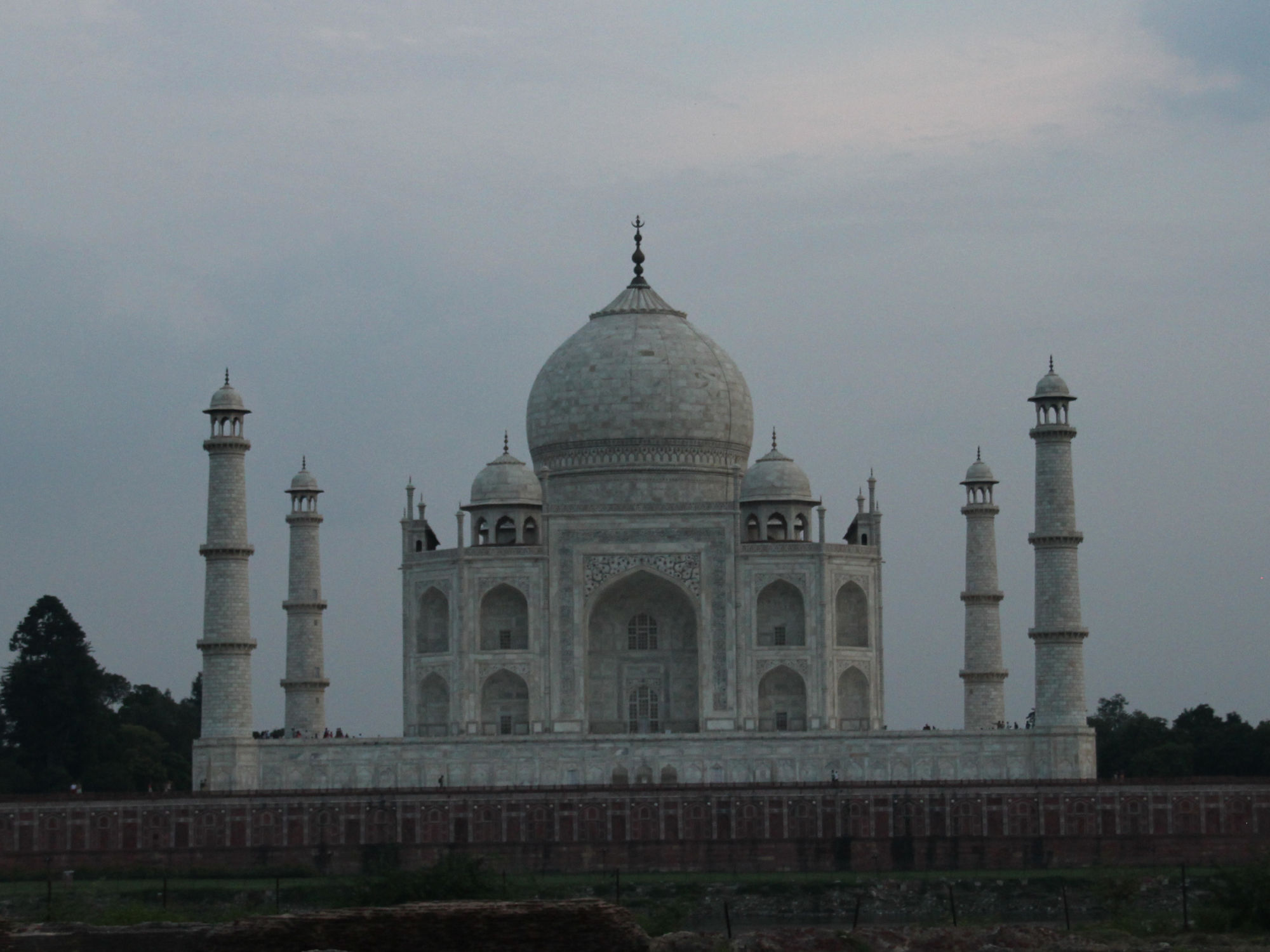
So, if you get to Agra, I strongly recommend you invest £5 or £6 in a taxi to get a view of the Taj at either or both ends of the day if it’s not on the itinerary. After closing time in the evening, one of the best views is across the river. It’s clear on the map and the taxis know exactly where to go for “ a wait and return” on the riverbank.

The second piece of advice is to suggest that you have a really good look at the Taj Mahal to enjoy it so it’s not just seen through a viewfinder or compact camera screen. It has amazing detail!
Agra Fort, built by Emperor Akbar in 1565, is a vast complex of buildings and a significant palace and lakes and gardens with perimeter red walls of over two miles and views of the river and the Taj. It still houses an Indian Army staff college. A great deal of the fort was restored by Lord Curzon in 1906 and at the same time he established there the first major insane asylum in India. Today “Going to Agra” refers to people with mental problems.
Jaipur
My first impressions of Jaipur, after New Delhi, was that of order, design and form and local regulations insist that all buildings in the centre are pink. So it’s no surprise to learn that this part of Rajasthan is one of the world’s largest producers of mined ochre. As a motorcyclist one detail stood out: all bikers wore helmets whereas in Delhi no one used helmets – apart from the cops.
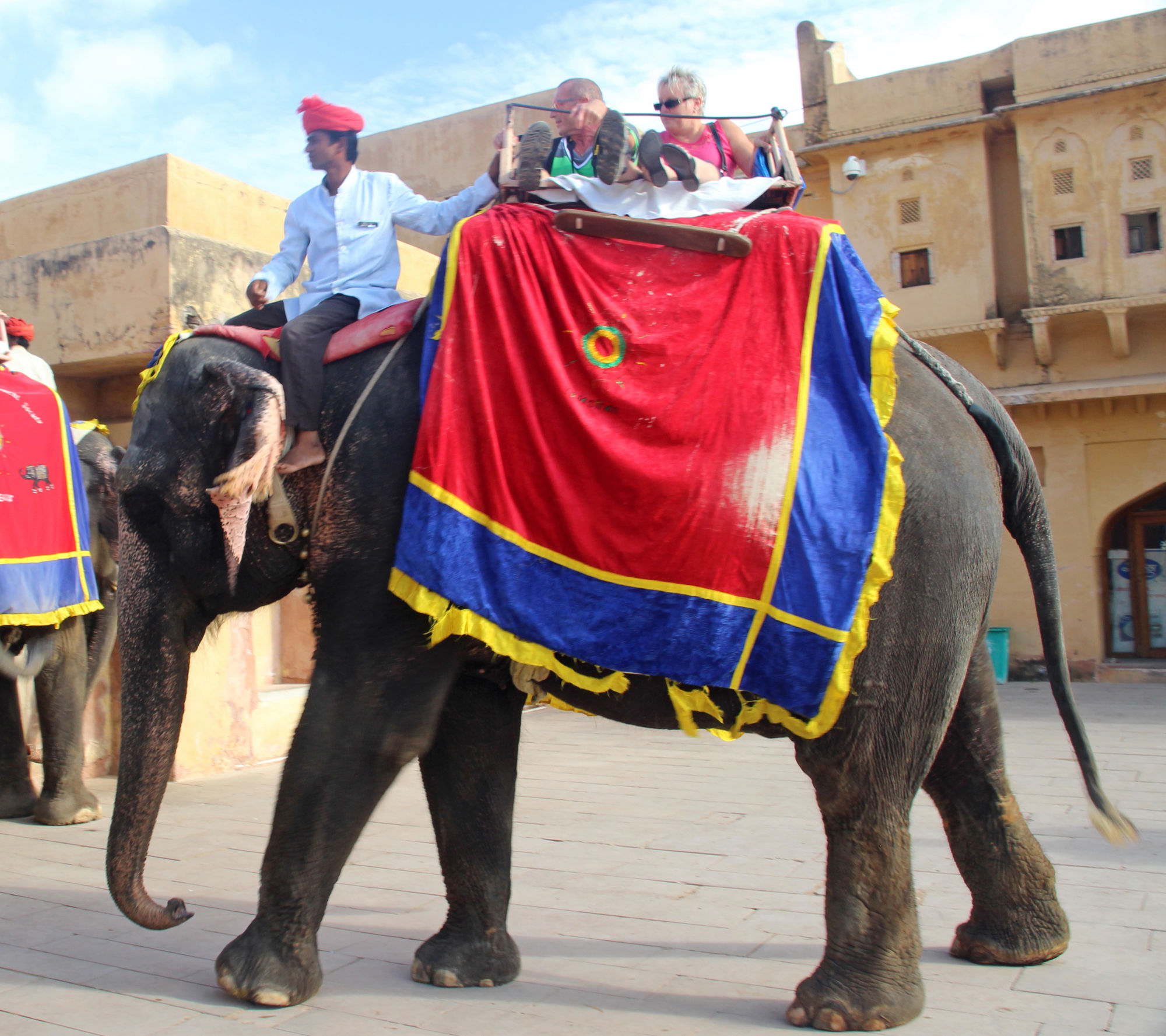
The largest feature is the magnificent fort, pink of course, and the star attraction is the elephant ride up a long hill to the main gates. The fort is on a similar scale to Agra but has greater Moorish influence and use of water. Some of the interior detail is outstanding with whole walls covered in mirrored glass, gold, silver and semi-precious stones.
Jaipur is also India’s main centre for precious stones some of which are locally mined with the ochre. Jewellery shops abound and I had some in-depth exposure when I accepted an offer to go on someone’s roof to get a clear, squared up, photo of the Hawa Mahal. To get down I was led through about eight jewellers and nearly missed the coach.
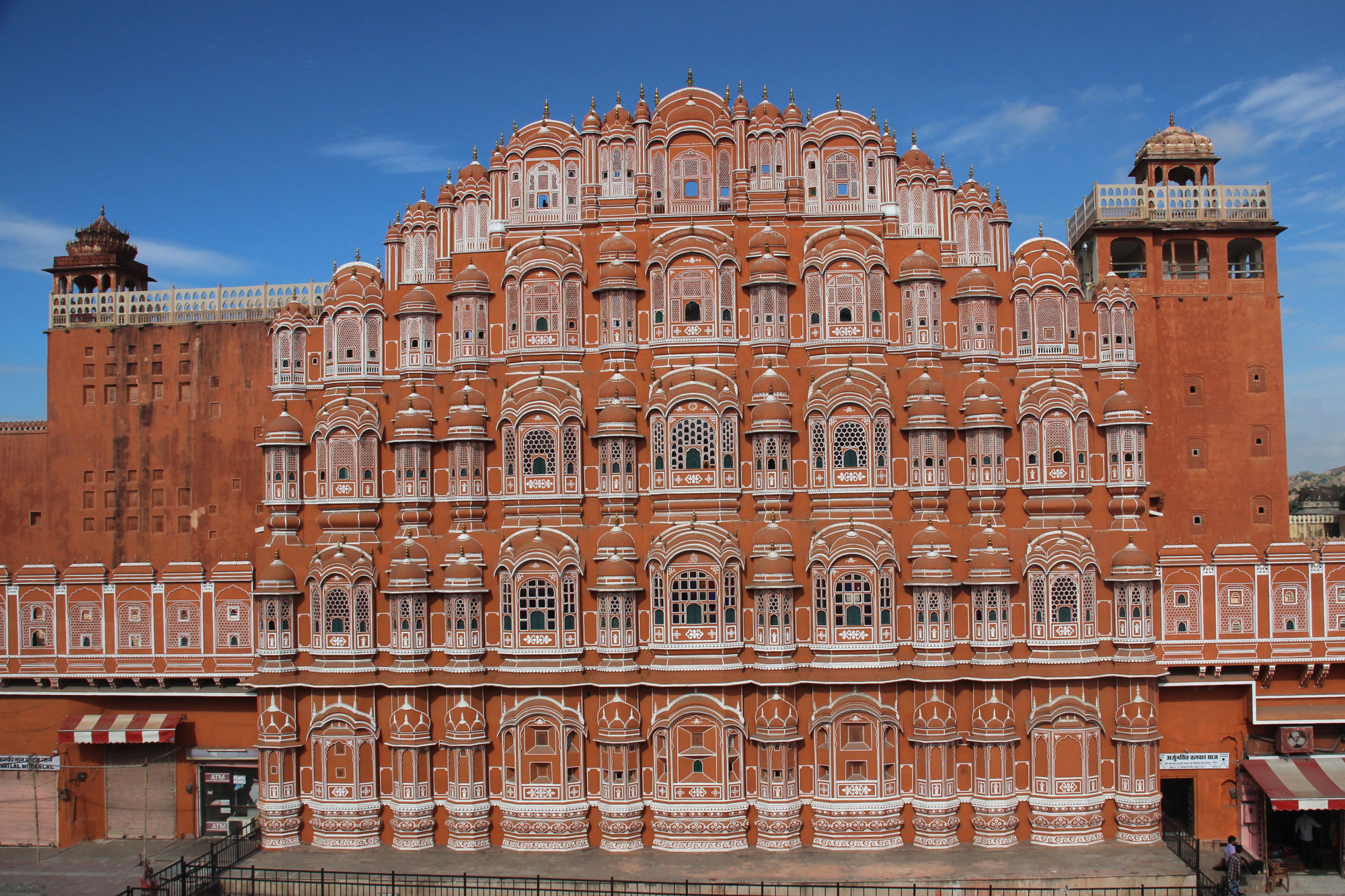
The Hawa Mahal or House of Breezes was built in 1799 by the Maharaja of the time as “women’s’ chambers” with 950 windows so that air circulated in the hottest month. On either side are shops with dazzling displays of pottery, fabrics, carvings and many have artists and craftsmen at work. Jaipur has great style and it would be no problem to spend a week there.
All images (c) Anthony Lydekker
Tell me more about the India Golden Triangle Tour
The whole India Golden Triangle package supplied by South Quay Travel, costs £980 pp half board using Air India with transfers and site admissions based on a group of 25+ passengers (2014 prices)
Three hotels were included in the India Golden Triangle package:
Clark’s Inn Hotel in Gurgaon, about 20 miles from the centre of New Delhi. Mansingh Palace Hotel, Agra; Hotel Mansingh, Jaipur. My rooms were comfortable but fairly basic. Some of the group had problems with their rooms and requested changes. The breakfasts and buffet dinners were good.
For a first visit to any of the large cities, I strongly advise going with an organised tour entirely for reasons of comfort and efficiency. This does not necessarily apply to young experienced travellers. I accompanied a group of 34 from the Sports and Social Club of a Government head office.
The India Golden triangle package was organised by South Quay Travel who specialise in providing all the bookings, and “ground handling” for groups of over 20 travellers. They, like any experienced tour operator or travel agent, can advise on preparations for an India trip including visas (£90 pp) and necessary vaccinations. This is covered by NHS websites.
Coming next: we take to the hills
In the second part of our India Golden Triangle tour, we leave the coach and travel on a unique mountain railway to Shimla (formerly Simla), sit on a Yak, see the highest cricket pitch in the world and the small office where the whole sub-continent of 400 million people was ruled every Summer until August 1947.
If you enjoyed this review, why not check out these similar posts:
 Insider Guide to Rajasthan. Escape from India’s Golden Triangle in the Land of Kings.
 Taiwan Lantern Festival. Celebrate the new year with glorious colour and magnificent lanterns.
 Anantara Golden Triangle Elephant Camp & Resort. Discover the ultimate playtime with elephants.
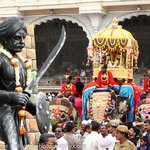 Spectacular Mysore Dasara Festival


