

Andy Mossack reveals his Insider Guide to Rajasthan as he encounters a gloriously tourist-free side to the Land of Kings.
Believe it or not I’m stretched out in an outdoor jacuzzi watching a magnificent sunset.
And it gets better. My jacuzzi is on the corner parapet of a 17th century fortress perched on a remote hilltop with the vast Daang plateau stretching out below on all sides.
Being the guest of a royal family certainly has its benefits, and I am making sure I get to use as many of them as humanly possible.
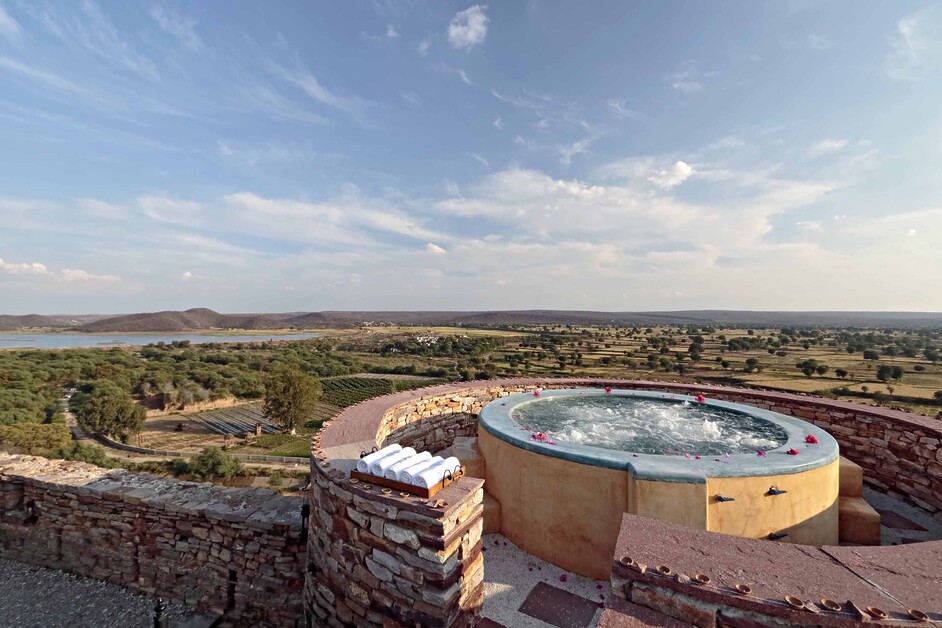
Remote Ramathra Fort was my introduction to a Rajasthan well beyond the throngs of a typical tourist treadmill tour. I was looking to experience the eastern part of the largest state in India from a different perspective; where the countryside is king and where the rich colours, sounds and sights on my doorstep resonate from local life and not tour buses.
Come with me as we explore my Insider guide to Rajasthan.
Jaipur
The famous Pink City is my one concession to that tourist-free pledge, because no visit to Rajasthan would be complete without experiencing why this city is unmissable. The Amber Fort of course, the colourful bazars and Hawa Mahal, surely the most photographed façade in the city. That said, there are some wonderful jewels tucked away that many tourists will miss, so stand by.
Jaipur is unique because it’s India’s first planned city and an architectural masterpiece thanks to its founding in 1727 by Maharajah Jai Singh II. Singh who had a profound interest in Mathematics, Architecture, Astronomy and Astrology instructed his architects to plan his new walled city using the measuring and geometry of a traditional Hindu building system known as Vastu Shastra. Essentially everything is based on or divisible around the number 9.
There were originally 9 gates (now just 7), 9 blocks of buildings all measuring 900 x 900 and the streets were 108 metres wide (9 X 9). Extraordinary. Finally, he invited craftsmen, each specialising in different skills, to set up their businesses in the city free of charge. This was a genius move. Instantly making Jaipur an important trading hub and very wealthy in the process. There were of course 36 tradesmen and to this day each of the old city’s streets remain dedicated to a specific craft such as metalwork, marble masonry or even block printing.
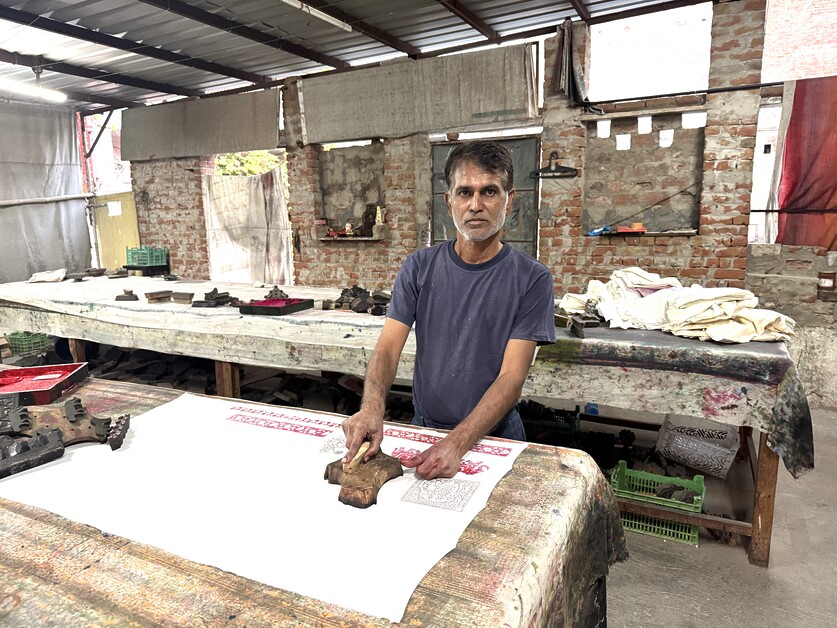
Speaking of which, I visited Dinesh Ji, whose family have been block printing from his family home in the old city for 120 years. It’s not just a technique; it’s a tradition passed down through generations. Dinesh learned everything from his great grandfather. He uses wooden blocks and dyes to create coloured patterns on textiles in reverse, in someways not dissimilar to the old hot metal systems newspapers used to use. Of course, I had to have a go at it and with a little help ended up with a passable hankie. To be honest, Dinesh’s wife’s Masala chai and hot pakoras were much more memorable than my feeble attempt.
Get up early and visit doodh-mandi, Jaipur’s milk market where fresh milk arrives direct from farms in cans on a variety of vehicles including motorbikes, rickshaws and camel carts. It’s fascinating watching everyone negotiating back and forth. It’s also close to Jaipur’s main food and flower markets where a riot of colour awaits.


Just off Tripolla Bazar one of Jaipur’s oldest markets, you’ll find narrow Maniharo ka Rasta, nicknamed bangle lane. It showcases colourful craftmanship where beautiful lac bangles are made to order before your very eyes in a matter of minutes. You’ll find a veritable army of master banglers sitting outside their shops creating beautiful bangles for a fraction of the prices you’d pay in the shops.
Murti Mohalla is where you’ll find skilled marble sculptors hard at work creating Hindu and Jain deities that have developed into a form of fine art.
Safe and Reliable Rickshaws
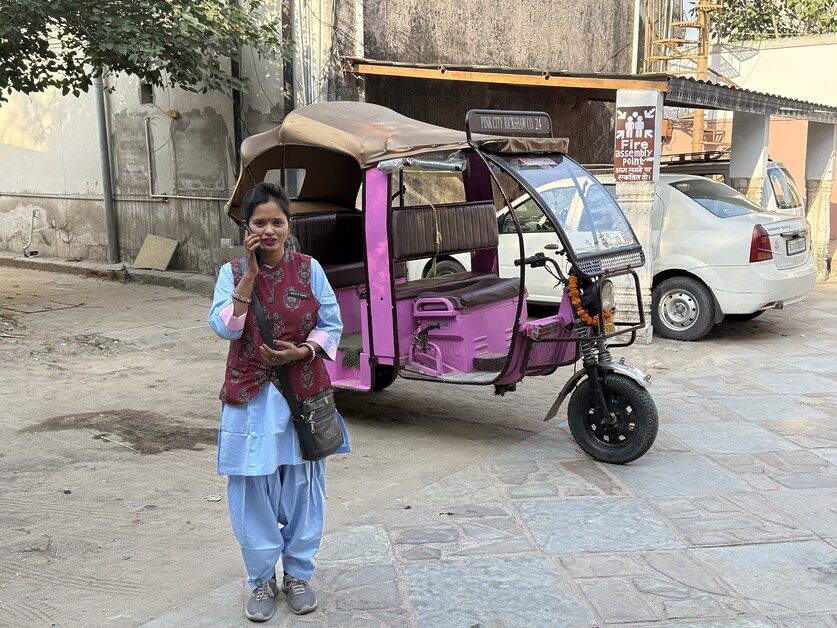
If you’re looking for a safe and reliable rickshaw ride, make sure you use Pink City Rickshaw Company, an excellent not for profit charity who provides employment to women from low income families or who have suffered mistreatment.
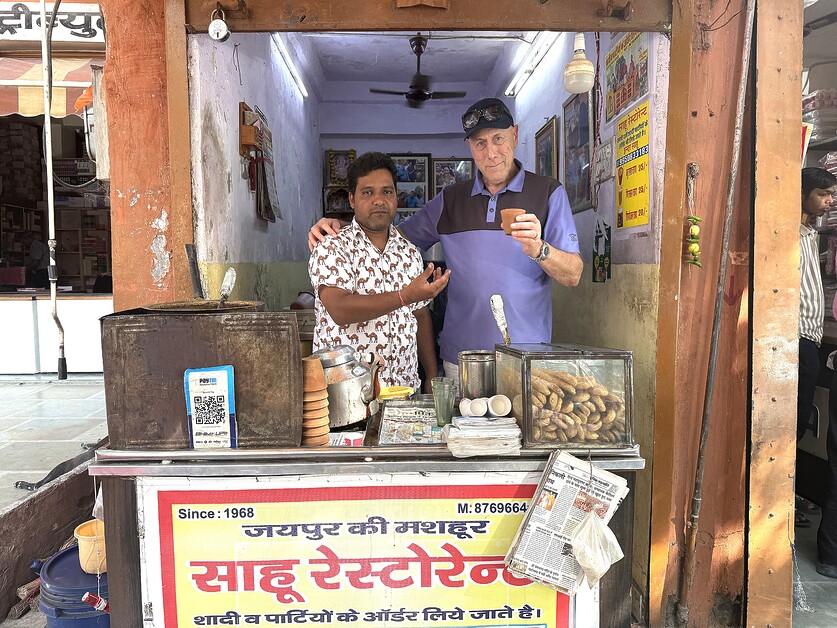
Best street food: Kisham Tea – masala chai wala Pranshu, now something of a celebrity ever since President Macron drank a cup from his shop. The clay teacup is a nice souvenir and reusable, so take it with you.
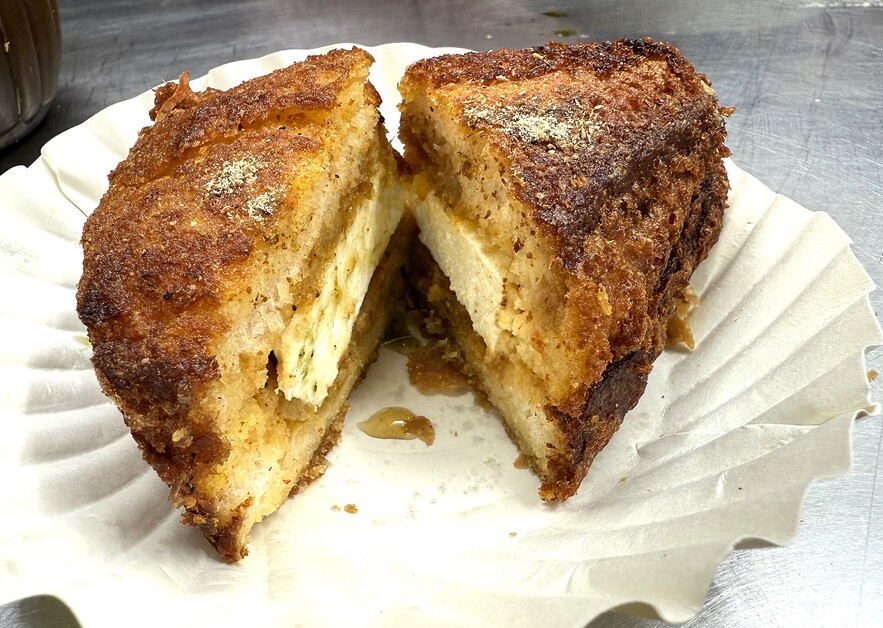
Samrat Restaurant serves the best samosas in the city. Everything comes up piping hot, while the onion kachoris from Pyaz ki Kachori with tamarind sauce is to die for. Go to Rahul Chaat Bhandar for delicious tikiya, a fried potato patty served with a chickpea curry.
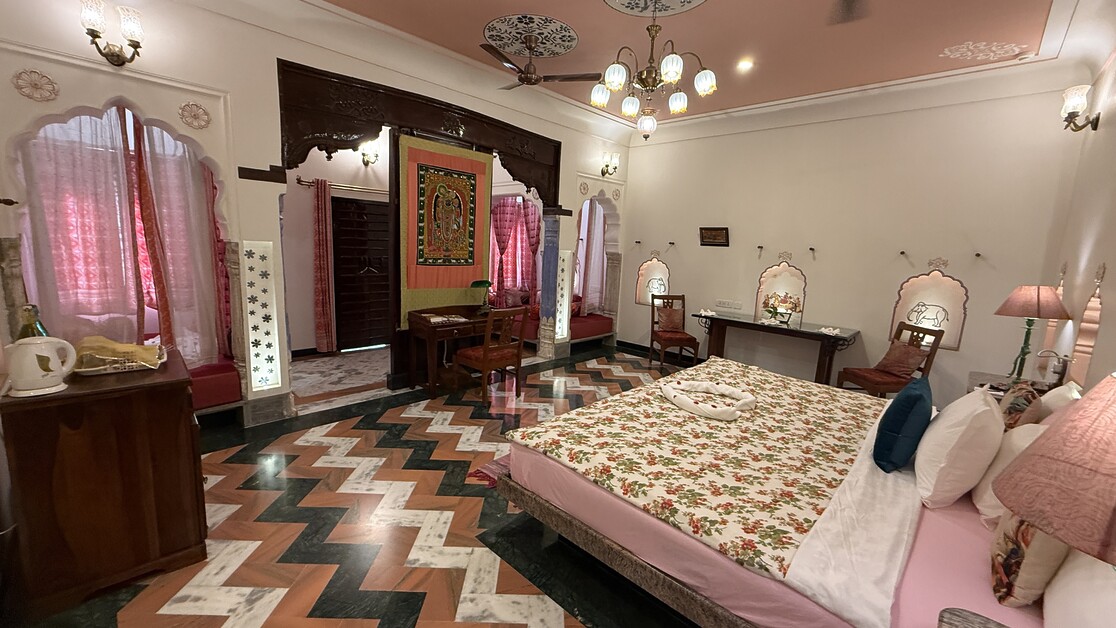
Best Heritage Hotel: Dera Mandawa is the 150-year-old heritage homestay of Durga Singh just a few minutes’ walk from the famous Chandpole Gate. He’s a wonderfully entertaining character who not only offers sumptuous accommodation in 11 beautifully handcrafted suites and delicious food, but famously delivers cookery lessons using his family recipes, presents traditional puppet shows and is simply an outstanding host. Dera Mandawa is a heavenly and tranquil retreat from the bustling old city just outside its walls. Highly recommended.
Onwards to Sariska Tiger Reserve and National Park
Leaving Jaipur, we headed deep into the countryside for a two-hour drive to the the Aravalli mountains on the trail of Bengal tigers in Sariska National Park. The Aravali is the oldest mountain range in India and has provided a natural corridor to a bounty of wildlife including tigers, leopards, monkeys and hyenas and an abundance of birdlife. Nestled in 800 square kilometres of the Aravalli foothills, the park offers access to visitors in guided jeep safaris, strictly limited to five vehicles at any one time within a designated buffer zone.

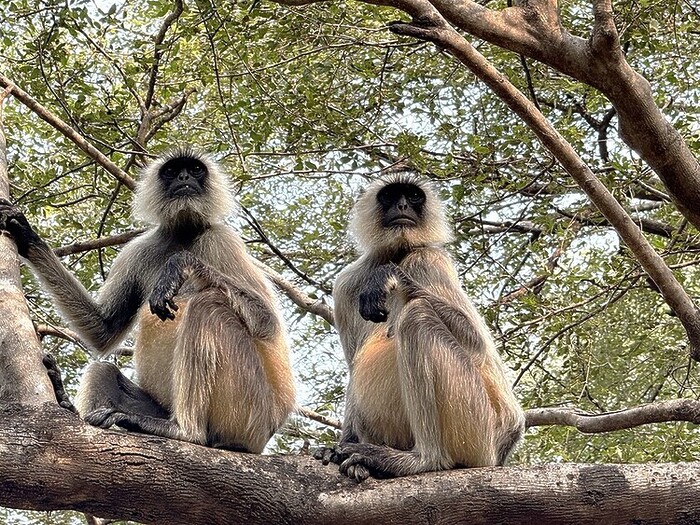
The tiger population has grown from 5 tigers reintroduced in 2009 to over 50, plus there are over 250 leopards. During my visit, despite a few pauses to listen in on various peacocks signalling alarm calls (dangerous animals nearby), we failed to get any sightings of big cats (unless tiger footprints count?) so I had to make do with antelope, wild boar and plenty of monkeys. That’s the natural world for you, but of course there was always hope with the next day’s safari.
Best Sariska Safari Hotel: My barren big cat encounter was mitigated with the welcoming embrace of Utsav Camp, a quite wonderful luxury wilderness lodge. Concepted and run by Luv Shekhawat, whose grandfather’s position within the Forestry Commission opened his eyes to conservation. Utsav is Luv’s passion project and was the first lodge to be built in south Sariska. Six years on, it’s now a luxury resort with beautiful stone cabins, forest bungalows and two-level villas. Experienced rangers are onsite to take guests out on daily excursions wildlife spotting in the wilderness.
Shahpura and Shahpura Bargh
Shahpura is a town with royal connections not far from Sariska and Jaipur, which offers a perfect snapshot of the local life I was seeking. It has been the seat of the Singh royal family for over 18 generations and its colourful clean streets are filled with shops selling everything from tailored suits and shoes to bridalwear. The bustling marketplace is a picture postcard just waiting to be taken.
The royal family have been highly influential in supporting the entire community for hundreds of years, from providing the schooling of local children to creating over 500 lakes that still supply rainwater to over 200 villages.
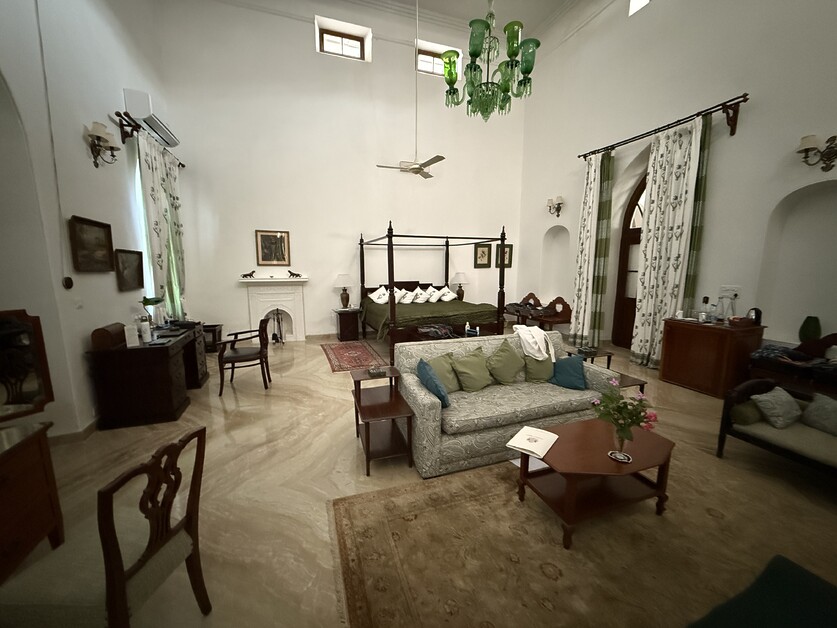
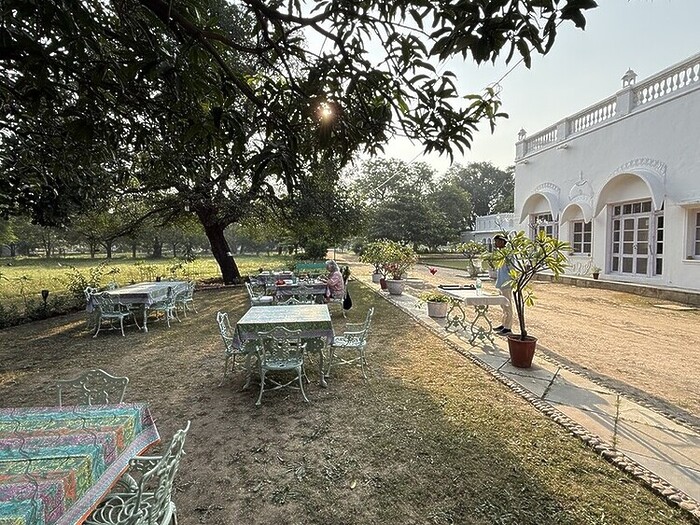
Take a right turn by one of the market stalls and you’re suddenly at the gates of Shahpura Bargh, the 375-year-old summer residence of the royal family which is now a stunning heritage hotel. Still owned and run by royals Jai and Mandy Singh, this magnificent 45-acre estate features gloriously spacious suites, manicured grounds and a fabulous restaurant serving exceptional regional dishes out on the veranda in winter and inside during the summer.
There’s a huge lake in the forest at the rear of the estate, while an Olympic sized pool area offers plenty of sunloungers and relaxation. Jai and Mandy are wonderful hosts and fully invested in making a stay here more than memorable, from the delicious dining to their local guided jeep excursions around the community.
With that notion in mind, my wife and I spent an unforgettable sundowner atop the battlements on a tower at Dhikola Fort, the family’s partially renovated fortress complex. Sweeping views over all the surrounding lakes, a glorious sunset and some exquisite cocktails and snacks over tales of the fort’s fascinating history. Quite something.
Ramathra Fort and Village
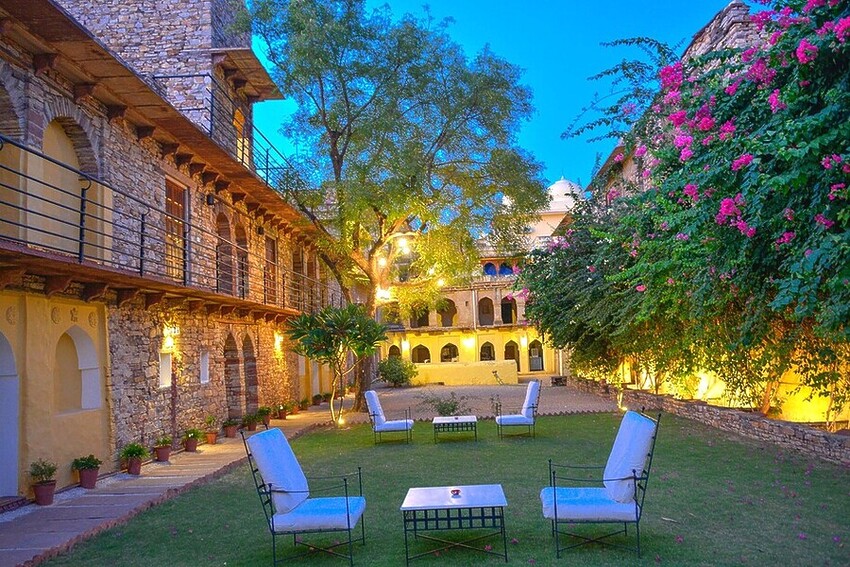
Which conveniently brings me back to my jacuzzi experience at royal Ramathra Fort. By now, due to Rajasthan’s tumultuous history leaving a veritable array of royal palaces in its wake, I was getting rather used to this regal way of life and there’s no doubt calling it the land of the kings is spot on.
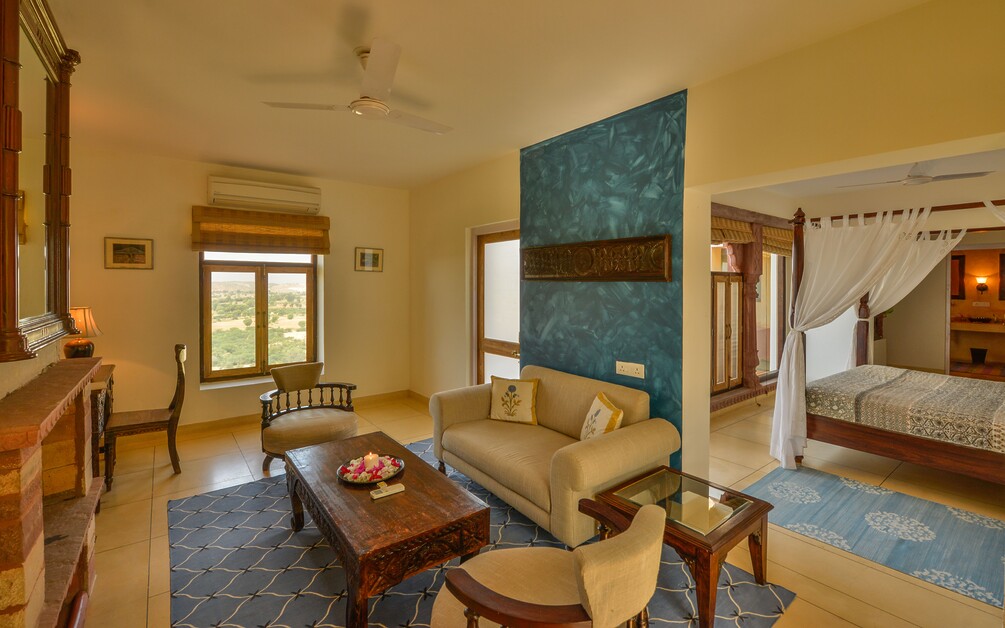
Ravi and Gitangili Pal are the latest generation of a royal dynasty reaching back to 1645 and have made a wonderful job of restoring this beautiful family hilltop fortress into a tranquil boutique retreat. Like the Singh’s, Ravi and Gitangili continue to support their local community through employment and using local artisan labour throughout the renovations. Which is still on-going. Currently Ramathra has four beautiful guestrooms and six luxury tents within the manicured grounds, with more planned together with a swimming pool. The delicious dining is from Gitangili’s own recipes, prepared in the family kitchen and sourced from farm-fresh seasonal produce.
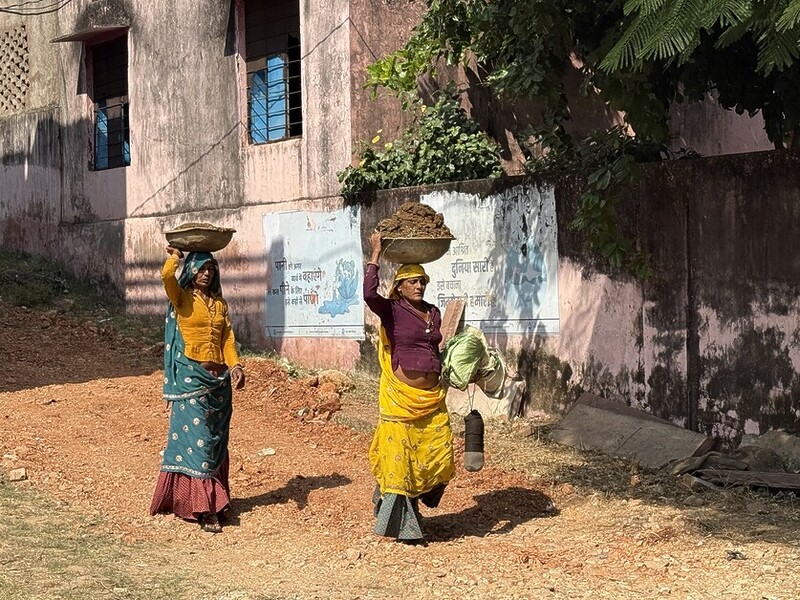
I thoroughly enjoyed taking a leisurely guided hike across to Ramathra village with Ottra, a long-standing member of the guest team. It felt very special to meet with the local farmers and cattle herders and get to see their traditional way of life. Ramathra also offers a piloted rowing boat experience on Lake Kalisil during the day or at sunset for birdwatching heaven.
I can promise you these experiences and stays are light years away from the well-trodden paths of tourism and offer a very different side to the Rajasthan you might be imagining.
If you want to be truly treated like royalty in the land of kings, this is most certainly the way to do it.
Now, where did I leave my towel.
Tell me more about this Insider Guide to Rajasthan
Experience Travel Group
This Insider Guide to Rajasthan forms part of Andy’s epic 4-part Indian Odyssey series around Gujarat, Rajasthan, Delhi and Uttar Pradesh, which was curated in collaboration with Experience Travel Group, experts in creating bespoke travel across Asia and beyond. If you want to follow in any of Andy’s adventurous footsteps in India or curate a different Asian experience for yourself call them on 0203 993 2054 or visit Experience Travel Group
Getting to India
Throughout his Indian Odyssey series Andy flew with Air India. A direct flight from London Heathrow to Delhi, from Delhi to Ahmedabad, Rajkot to Kochi and Kochi to London Heathrow via Mumbai.
Air India is the largest carrier between India and the UK, operating nearly 1.7 million seats annually on routes between the two countries. As part of its Northern Winter 2025 schedule, the airline announced a fourth daily flight between Delhi and London Heathrow with all flights now operated by its new Airbus A350-900 and Boeing 787-9 aircraft.
The airline also introduced its new global menu in November, curated by Chef Sandeep Kalra, who was tasked with combining the flavours of India with influences from global cuisines. It includes signature Indian dishes such as Murgh Massalam and Gen-Z delights like Chicken Bibimbap and has already been introduced on most international ex-India routes, including flights from Delhi to London Heathrow
If you enjoyed this review, why not check out these similar posts:
 India Golden Triangle. Immerse in spectacular colour sight and history
 Anantara Golden Triangle Elephant Camp & Resort. Discover the ultimate playtime with elephants.
 Ginger House Museum Hotel, Kochi, India. A museum stylishly blends with a unique boutique hotel in Southern India
 Insider Guide To Yunnan Province. Discover China’s Stunning Land of Eternal Spring.


