Andy Mossack revisits his memorable Grand Tour of Switzerland following its tenth anniversary.
Back in 2015 Switzerland launched the Grand Tour of Switzerland. An ambitious homage to those remarkable Victorian tourists who first embarked on this extraordinary adventure. Travelling only in horse-drawn carriages they circumnavigated all of Switzerland’s famous sights in an epic circular itinerary of a lifetime.
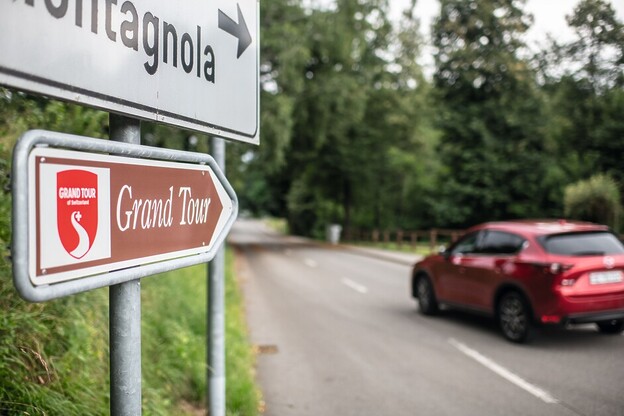
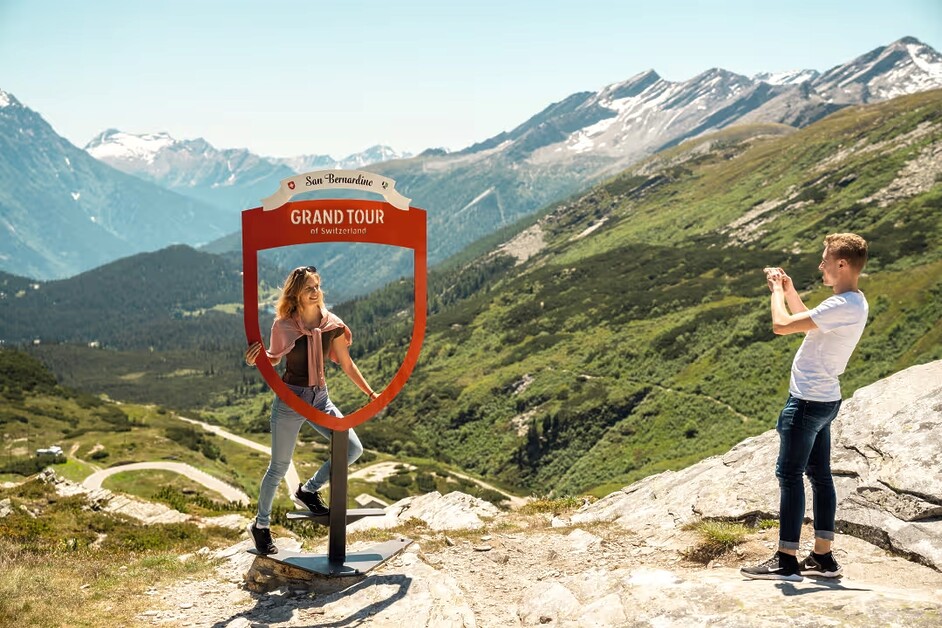
This modern Grand Tour of Switzerland is based around that same concept. A road trip taking in all the tourist attractions not by the quickest route – but by the most picturesque. A thrilling adventure clockwise or counterclockwise avoiding Swiss motorways by simply following 650 iconic red Grand Tour of Switzerland road signs. 1,643 kilometres divided into 25 legs, 46 must-see stop-offs, 22 lakes, 5 alpine passes and 13 UNESCO sites. There are also 88 Grand Tour of Switzerland Scenic Viewing signs to uncover, that are always placed at the most impressive spot at each stop. It’s always fun to try and find them and get a photo moment.
I did exactly that in 2015, taking a glorious three weeks to simply soak in the extraordinary views, the four different language and cultural regions, the gorgeous chocolate-box villages and those spectacular lakes.
Ten years on and I wondered if it would be as memorable. Would it provide the thrills and moments of my first experience? There were still unexplored parts of the Grand Tour I didn’t get to see, so it was an opportunity too good to miss.
I revisited the Zurich to Lugano leg, a dramatic stretch that included the magnificent Lake Constance and crossed over the Alps via the famous St Bernard Pass into the Italian-speaking Ticino region.
Zurich – Stein-am-Rhein-Appenzell
The beauty of Zurich airport is the ease of access to Switzerland’s iconic SBB train network. Directly connected to the airport, it takes just a matter of minutes to get down to the platforms. I was getting the train across to Stein-am-Rhein to begin my tour – a lovely old town with colourful timber-framed houses right on the Rhine. It’s a famous stop on the Grand Tour to see the Rhine Falls – 700,000 litres of water cascading every second. One of Europe’s largest waterfalls.
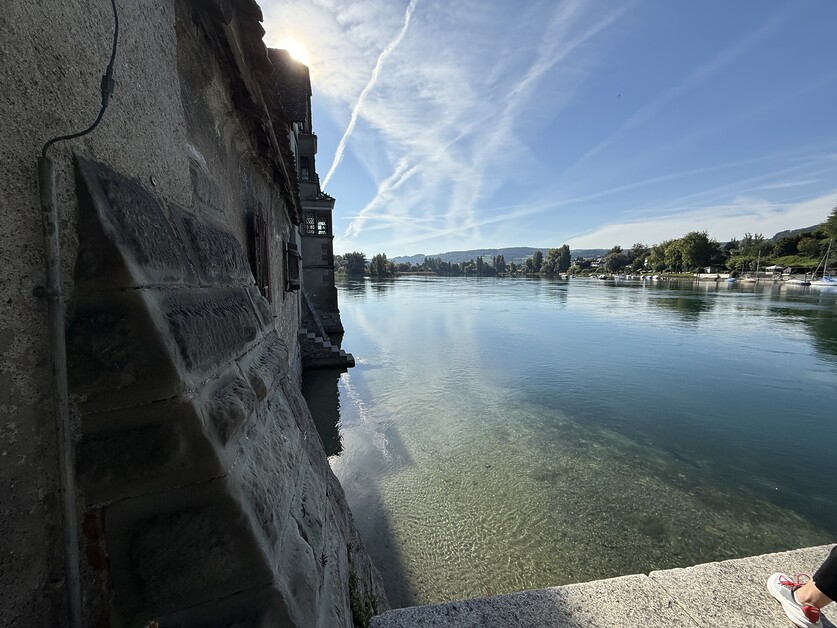
Stein-am-Rhein’s historic wealth came from its strategic location at the Rhine’s exit from Lake Constance where it controlled all the Rhine traffic and trade moving downstream. The lovely Schwegler family-owned 16th-century Hotel Rheinfels, where I spent my first night, is perched right on the banks of the Rhine and used to be the town’s Customs House and Guild Hall.
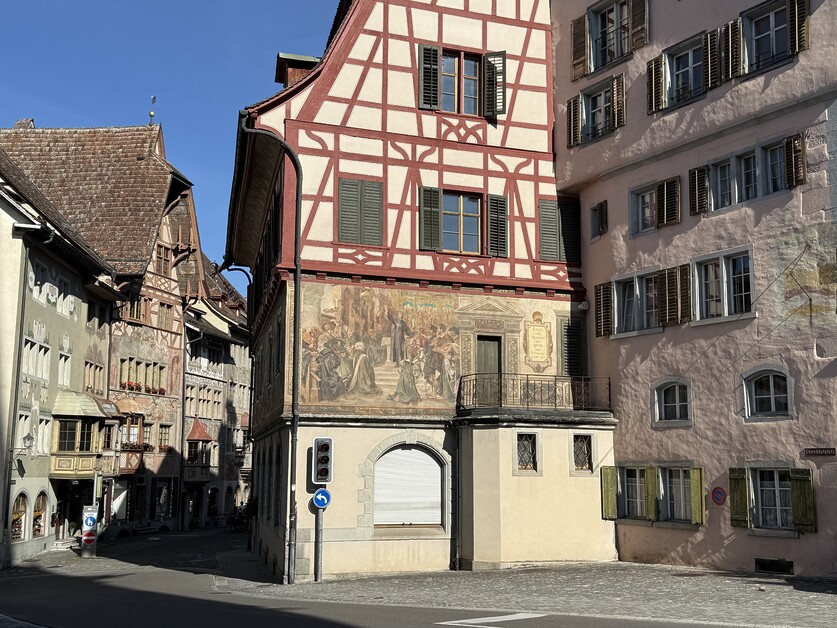
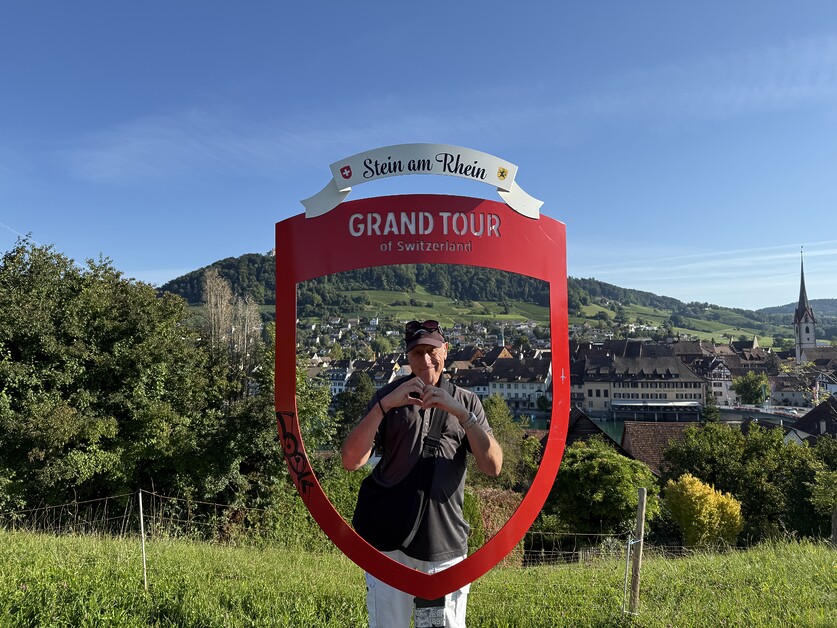
All over town are reminders of Stein-am-Rhein’s former wealth and status with stunning half-timbered architecture particularly in the main square. My guide Pius told me “the water here is so clean you can drink it directly from the river”. Perhaps though it’s best to take it from the many fountains dotted around the town! At the town’s highest point, I found my Grand Tour of Switzerland Scenic Viewing sign and got my photo shot.
Scenic Rhine Cruise and on to Appenzell via Kreuzklingen and Lake Constance.
Back at Stein-am-Rhein’s impressive Rhine promenade, I found the historic riverboat MS Thurgau patiently waiting to take me on a scenic cruise along the Rhine down to Kreuzlingen. Ever since 1865 the Untersee and Rhein (URh) riverboats have sailed along this section of the High Rhine and Lake Constance, and it’s considered by many to be one of the most scenic river cruises in Europe.
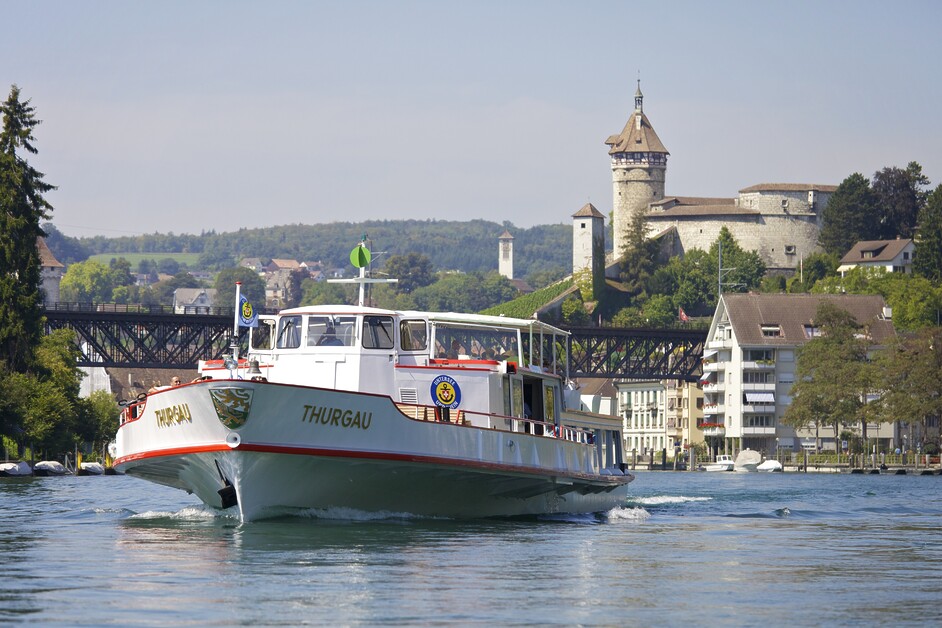
Not only was it a beautiful journey, I enjoyed a very tasty lunch with Remo the CEO of URh whose encyclopaedic knowledge came in very handy as we sailed past castles, fortresses and historic towns. “For most of this journey, Germany is all along the left side and Switzerland is on your right. And see that castle on the hill? That’s Schloss Arenenberg, Emperor Napoleon III grew up there and his mother Hortense decorated it with all kinds of remarkable interiors and furniture – which are still there – in memory of her step father Napoleon Bonaparte.
It’s now the Napoleon Museum and well worth a look.” We travelled on passing the Wollmatinger Ried nature reserve a protected stretch of water populated by thousands of swans.
Appenzell
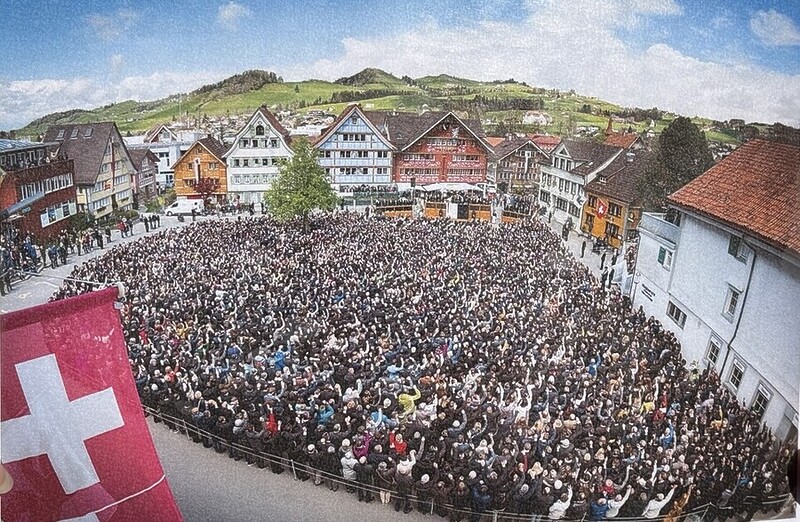
After a fond farewell to MS Thurgau at Kreuzlingen I was on the road at last and heading towards the mountains making my way to the pretty town of Appenzell at the base of the Alpstein massif. This is an alpine farming village steeped in Swiss traditions and one of only two cantons in Switzerland that still practice the “open parliament” voting system of counting raised hands in the town square at the annual council leadership elections.
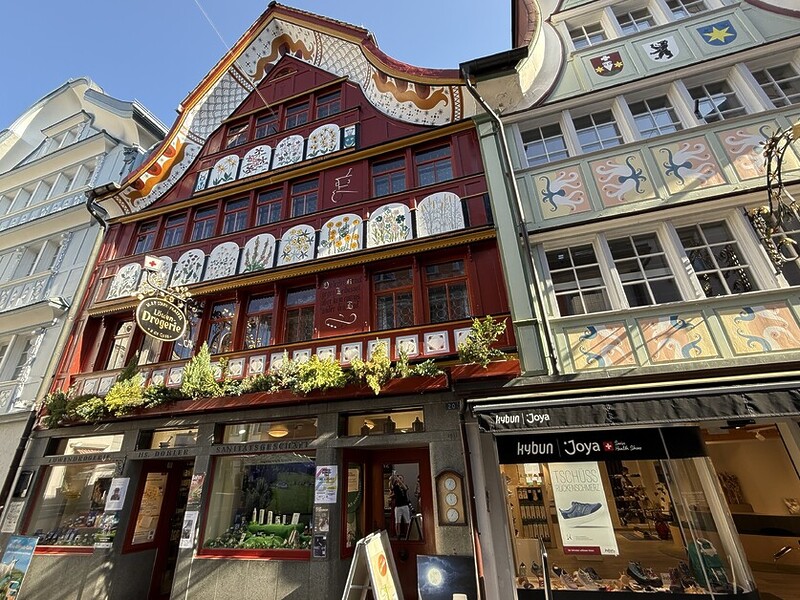 Yodelling is big here, as is cheesemaking, traditional dancing and the twice-yearly celebration of taking dairy cows up to the mountain pastures in summer and back down in autumn. The farmers, in traditional costumes, parade cows and goats through the town decorating them in floral necklaces.
Appenzell was a real joy to wander around – the beautifully painted timber houses, the parish church, the local crafts and even a remarkable brewery Brauquöll Appenzell still owned and run by the Locher family. Their organic beers are the stuff of legend in Switzerland and it’s well worth taking time out for a tasting session at the brew house. Also look out for the weird and wonderful street art of Roman Signer – the revolving disc and the table and chair by the river.
St. Moritz via Maienfeld (Graubünden) wine tasting
As the Alps grew ever nearer, the Grand Tour hair pinned around huge glacial valleys – one dramatic panorama following another. I was on my way to meet Gian Carlo Casparis who operates wine tours in Graubünden, the warmest wine-growing region in German-speaking Switzerland. Over 50 different wines are produced here and I was looking forward to sampling some (with no swallowing of course)
.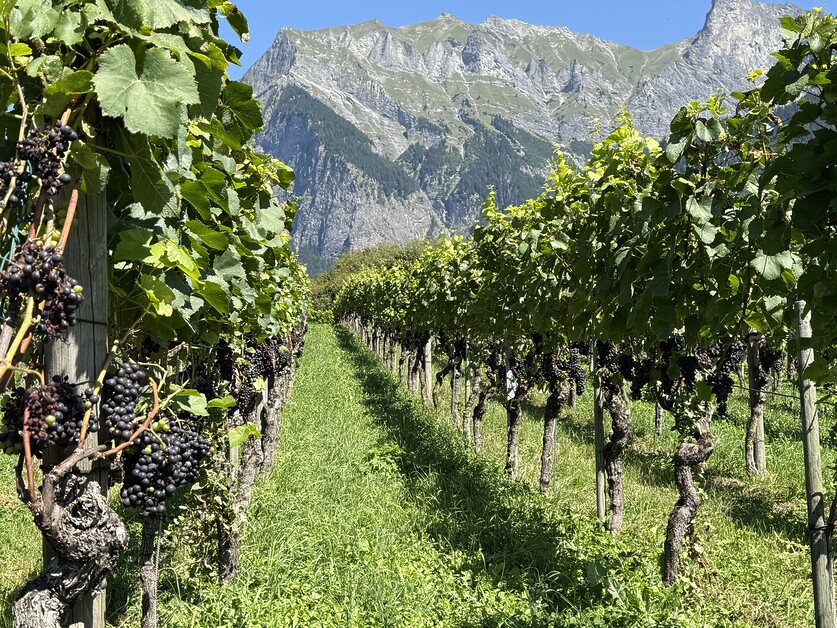
I met Gian Carlo at Stall 47 a (almost as famous as the original Heidi who also came from here) framed by glorious distant peaks. We had a walk through the vineyards before an excellent tasting of the local Blauburgunder with cheese and cold cuts. There is something totally magical about drinking wine alongside the vines that created it.
It’s a dramatic 2 ½ hour alpine drive from here across to St. Moritz and after a brief Grand Tour photo sign stop at the 7 Peaks of Churfirsten I drove through famous Davos-Klosters before taking the 2,384-metre Flüela Pass (and another photo sign) and dropping into the Engadine Valley to St Moritz.
St. Moritz first became famous in 1864 as wealthy Victorians flocked here to bathe in its natural mineral springs and gorgeous 4 km circular lake. Not long after, it established itself as an even more popular resort for winter fun and the legend of St Moritz as the Alpine region’s first skiing resort was born. There’s no denying this town oozes glamour, even in summer.
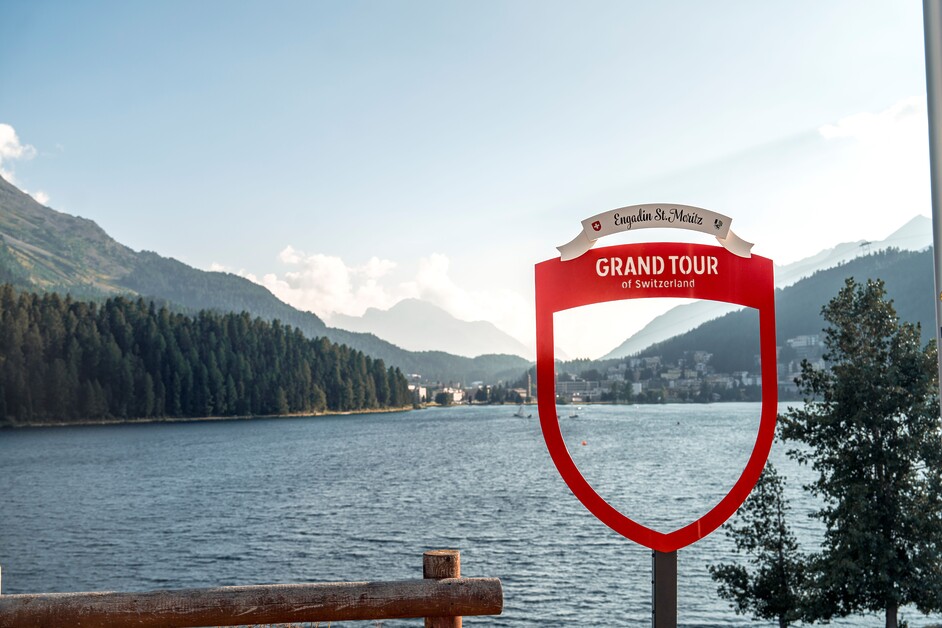
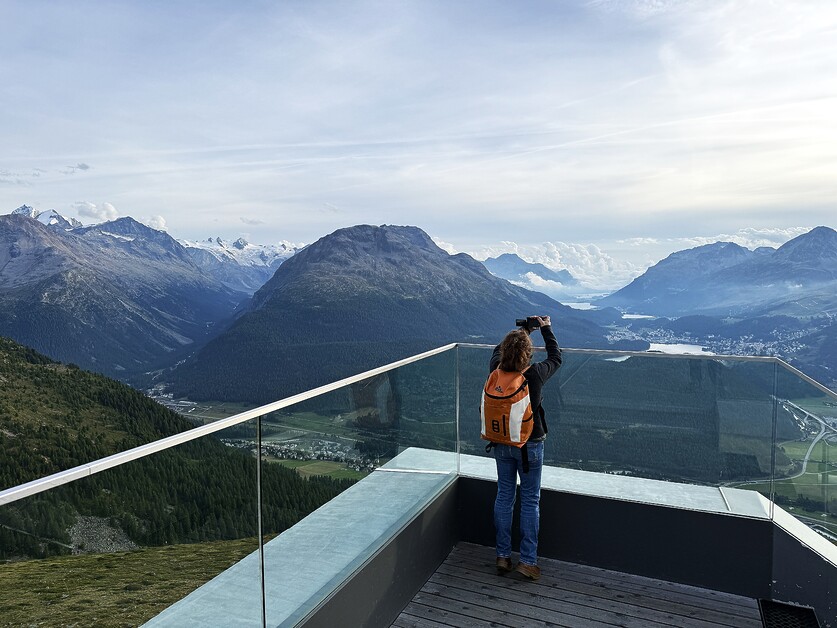
Three official languages – Italian, German and Romansch – its own airport, the Hotel Waldhaus boasting the biggest whisky collection in the world and the slogan St Moritz Top of the World created by Walter Herdeg in 1932, has been a registered trademark since 1987. Even the sun is registered in the trademark which should be no surprise as it gets an average of 322 days of sunshine a year.
The town is easily walkable and worth a stroll, particularly around the lake but to avoid all the designer retailers I took the funicular up to Muottas Muragl for some spectacular scenery across the entire Engadine Valley and the huge mountain peaks beyond. A place inspired by poets and painters for centuries. The luxury hotel up here served a highly memorable dinner. Highly recommended.
Homeward leg: Over the Alps to Ticino, Bellinzona and Lugano
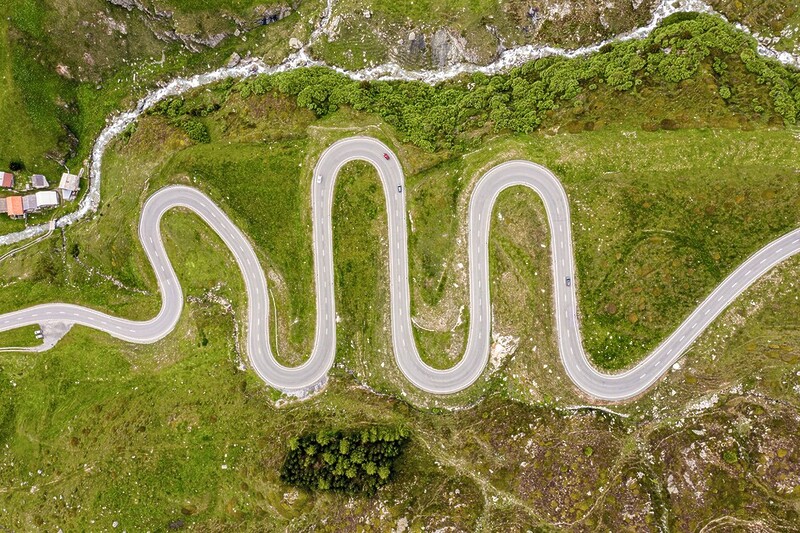
It was a three-hour drive to Bellinzona, the capital of Ticino, Switzerland’s Italian speaking region and southernmost canton. But what a drive! The 17 km San Bernadino Pass was once just a mule track and one of the few gateways to Italy from the north and once you drive it you understand how remote the canton is from the rest of the Federation.
Ticino was owned by the Visconti Dukes of Milan until the 15th century when the Swiss Confederacy conquered it and it joined the Federation. But because it is entirely located in the southern Alps it was the arrival of the train line in 1870 that transformed its economic and touristic future.
Ticino has so much to offer I urge you to read my Guide to Ticino for a closer look.
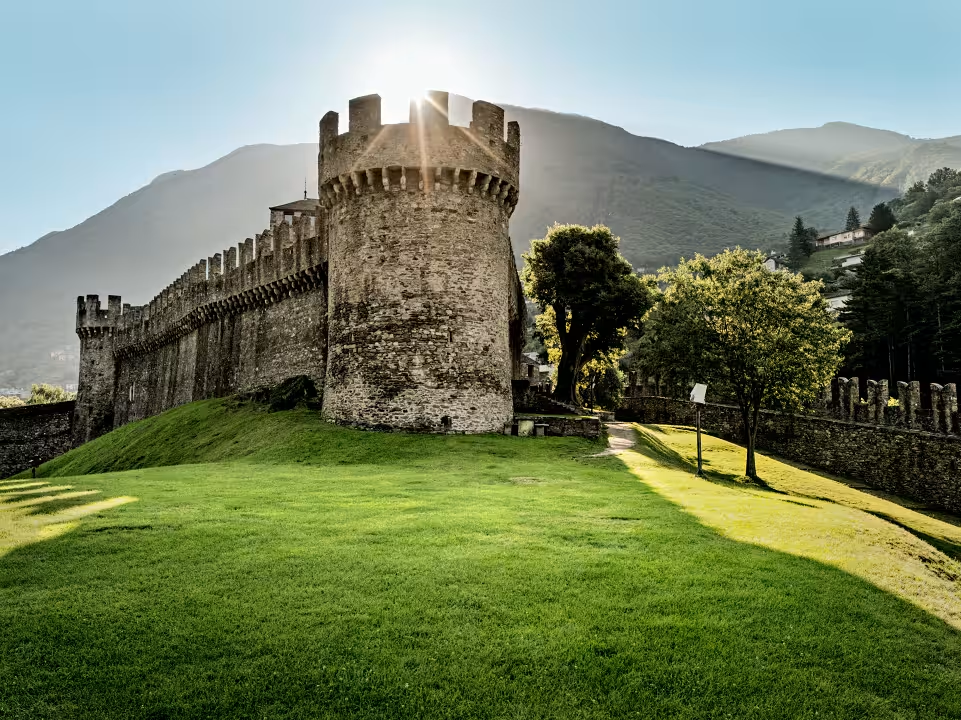
Bellinzona’s strategic importance is evidenced by its three magnificent UNESCO protected medieval castles and fortress. Castelgrande, Montebello and Sasso Corbaro are dazzling examples of the city’s significant history.
Another hour’s drive brought me to Lugano, Ticino’s Monte Carlo by the Lake and my journey’s end. But what a place to finish my Grand Tour of Switzerland. This is a slice of palm tree lined Mediterranean style glamour along the shoreline of the stunning Lake Lugano. The water taxi is the transport of choice to ferry you around Lugano’s many gorgeous grottos and tiny fishing villages clinging to the rocks around the lake like Gandria and Morcote. Or try taking the funicular up to Monte Brè nearly 1,000 metres above Lugano.
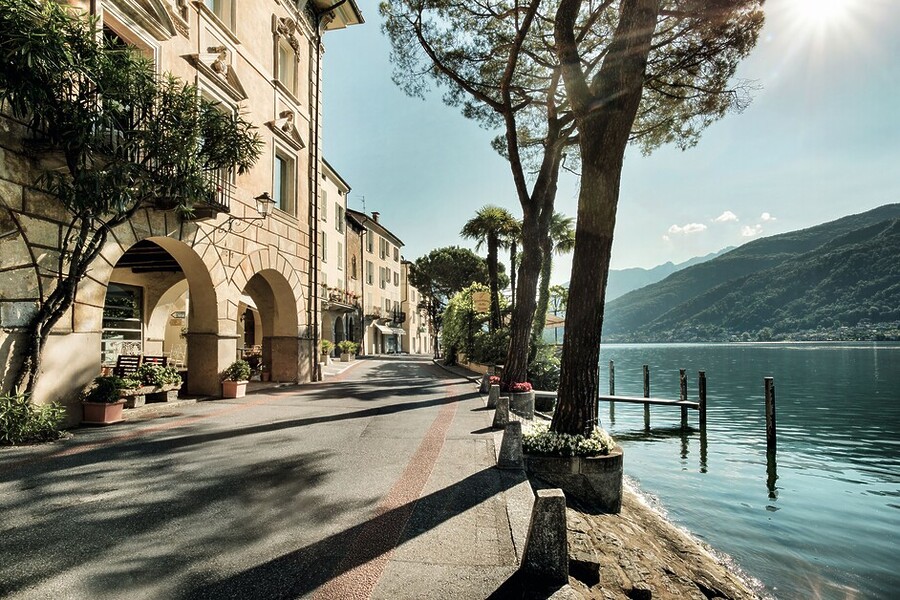

Even better, celebrate your Grand Tour drive in style at Castello di Morcote and indulge in a gastronomic wine tasting experience and a sumptuous lunch or dinner. The winery is a family-owned business and entirely organic. Their boutique hotel, a converted monastery, is also a delightful place to spend the night.
I took the Gotthard Panorama Express train back to Zurich. A spectacular journey using carriages with huge panoramic windows to give you the full outdoor experience from the comfort of your seat. During the journey the train enters the Gotthard tunnel and slows to a crawl as projected on to the tunnel walls is the story of the building of the tunnel which took ten years between 1872 and 1882.
A celebration of an extraordinary feat of engineering by architect Alfred Escher, but also a memorial to the miners who lived and worked in horrendous conditions, many of them losing their lives in the process.
Ten years on the Grand Tour of Switzerland hasn’t lost its sheen. If anything, it’s matured. Now there’s a more in-depth app to accompany you and many more photo stop signposts. I also realised there were many places I had missed on that first tour. And, there are still plenty more for me to look forward to.
Until the next time my friend.
Photo credits (C) Andy Mossack, URh, MySwitzerland.
Tell me more about The Grand Tour Of Switzerland
The Grand Tour Of Switzerland is celebrating ten years of adventure this year. A road trip through the heart of Switzerland’s most iconic landscapes.
Where to stay
Andy Mossack stayed at four iconic hotels during his Grand Tour
Hotel Rheinfels – Stein am Rhein. Lovely historic family-owned hotel right on the banks of the Rhine.
Hotel Hecht – Appenzell. Excellent position close by the river. Lovely traditional setting.
Hotel Grace la Margna – St Moritz. Brand new luxury hotel. Outstanding rooms and service.
Grand Hotel Villa Castagnola – Lugano. Iconic former luxury house with beautiful gardens. Right next to Monte Brè Furnicula.
Untersee and Rhein (URh) Rhine Riverboat Cruise.
Brauquöll Appenzell Brewery Appenzell
Wine Tours with Gian Carlo – Maienfeld
Tenuta Castello di Morcote – Lugano wine estate and tasting. They also have a lovely boutique hotel, Relais Castello di Morcote and an equally delightful restaurant La Sorgente which I can highly recommend!
Travel to Switzerland and getting around.
SWISS Senses. New onboard cabin services with SWISS.
Swiss Travel Pass – Free travel on all Swiss trains, the boat from Flüela to Lucerne and various museums.
Switzerland Tourism for all information on visiting Switzerland.
There is also a Grand Train Tour of Switzerland and An E-Grand Tour of Switzerland.