
Rupert Parker Goes Truffle Hunting, just one of the many delights awaiting In His Insider Guide To Istria.
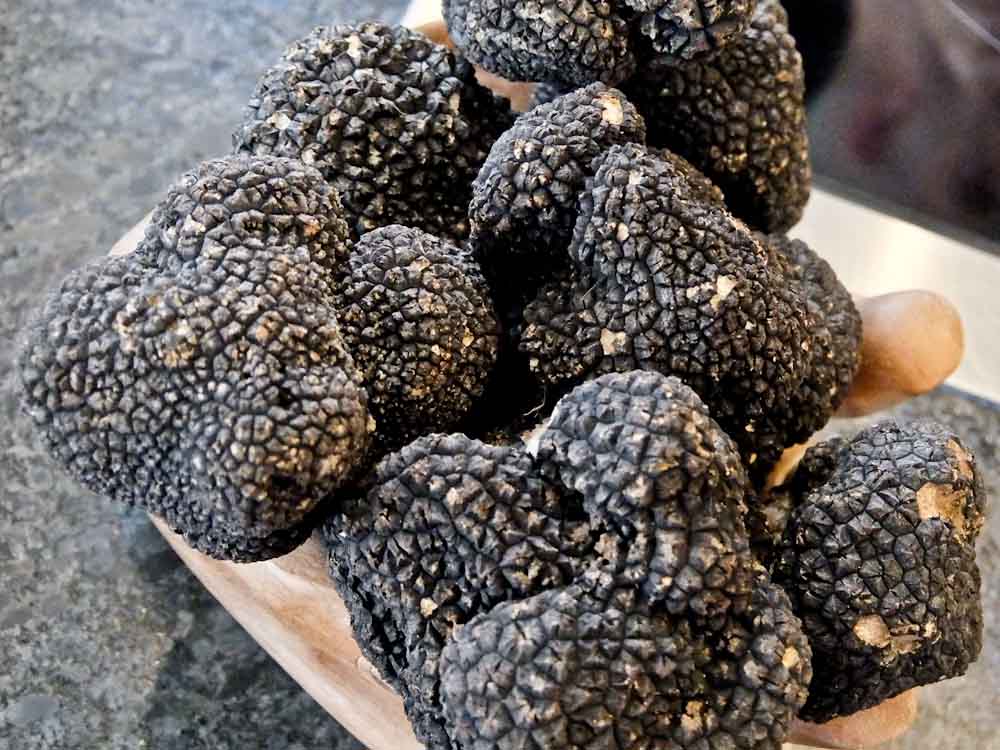
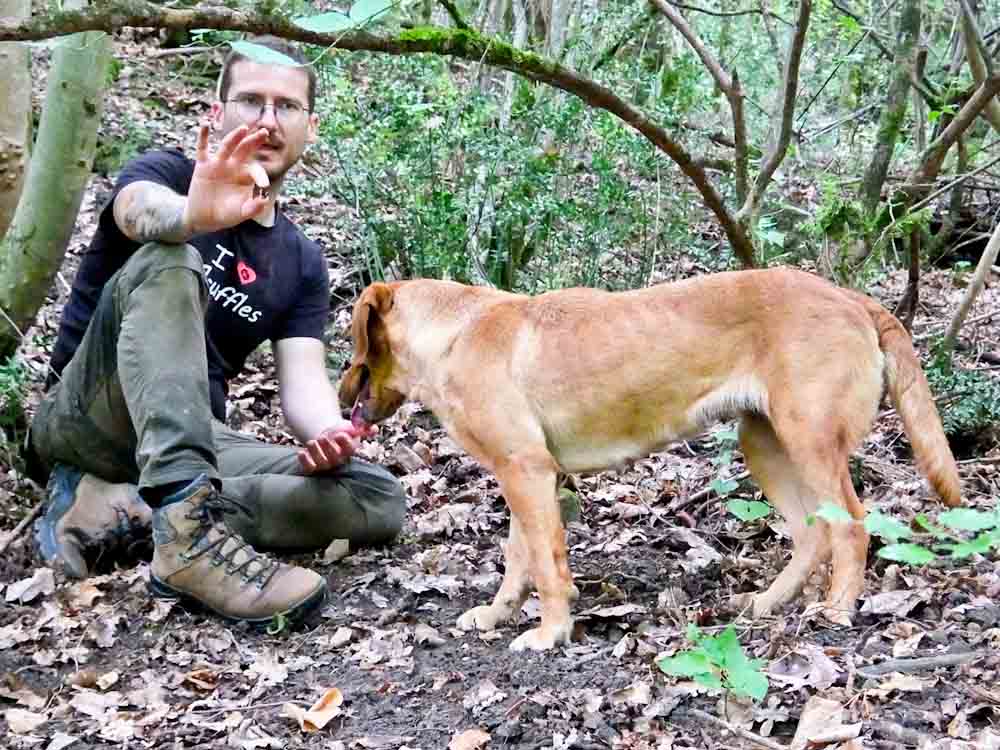
I’m trudging through the forest, just outside Buzet, with my guide Armin Hadzic. This is prime truffle territory and it’s rained overnight so conditions are good. Suddenly his dog Gica stops to paw at the earth, and Armin rushes over. If he’s not quick the dog will swallow this black jewel but all is well. He scrapes at the earth to reveal a black summer truffle hidden just below the surface.
Istria is Croatia’s northern heart-shaped peninsula where Mediterranean charm meets centuries of history, world-class gastronomy and some of Europe’s most beautiful coastal landscapes. In a matter of kilometres, you pass from turquoise coastal waters to rolling vineyards, olive groves and hilltop towns rising above the forests.
The region has a distinct identity shaped by centuries of Roman, Venetian and Austro-Hungarian influence. These layers of history are visible everywhere, from ancient ruins and medieval churches to elegant Venetian architecture overlooking the sea.
Unlike many destinations shaped by mass tourism, Istria retains an authenticity that rewards slow exploration. Every village has its own story, every meal reflects local traditions and every road reveals a new panorama of vineyards, forests or sparkling coastline.
From the colourful streets of Rovinj to the ancient stone houses of Vodnjan, the fishing heritage of Fažana, the truffle-rich forests around Buzet and the medieval hilltop beauty of Motovun, Istria is one of the Adriatic’s most captivating destinations.
Bale
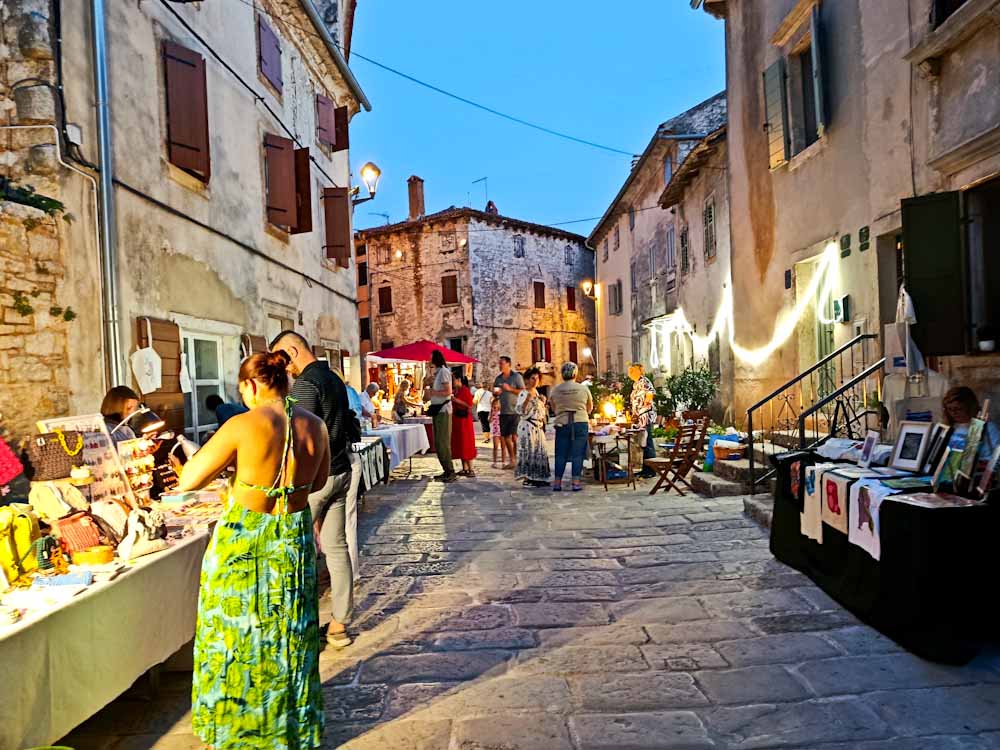
I arrive at the airport in Pula, after my Jet2 flight, and a short drive inland brings me to Bale, one of Istria’s many medieval towns. This is going to be my base for a few days and I’m immediately struck by the charm of its quiet sloping stone streets – narrow alleyways reveal hidden courtyards surrounded by traditional homes built from local stone.
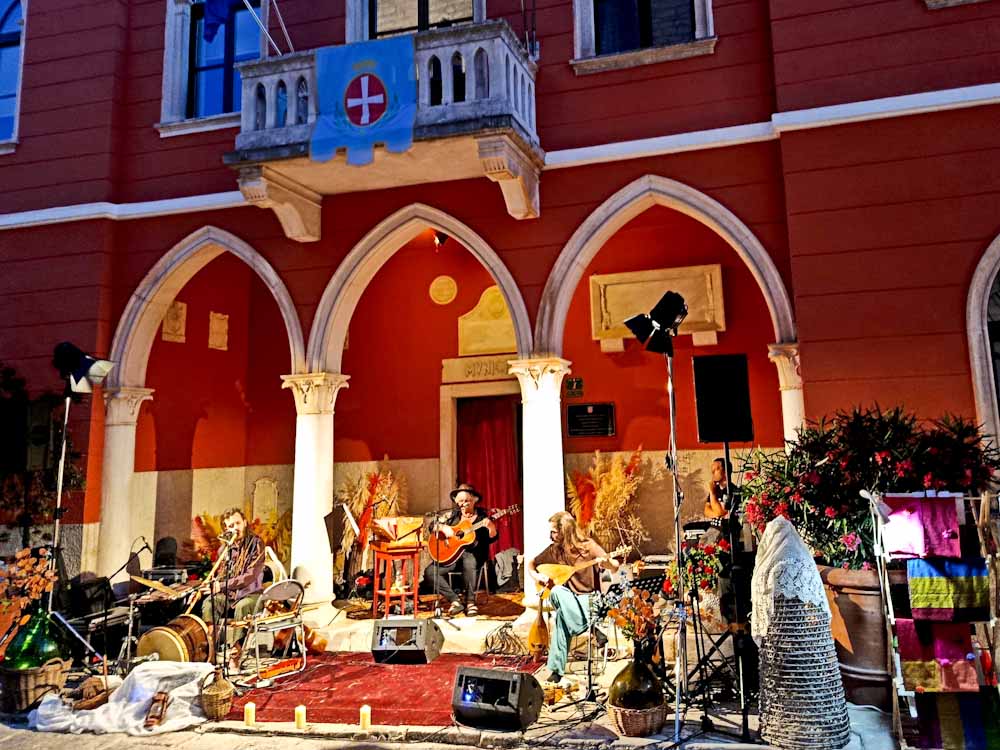
The historic centre is dominated by the Soardo-Bembo Palace sitting in a square opposite the imposing town hall. Bale has become a haven for artists and creatives, and hosts cultural events and exhibitions throughout the year. I’m lucky to be here for the last night of a traditional craft fair – the streets are lined with artisan stalls and there’s local music in the main square.
Rovinj
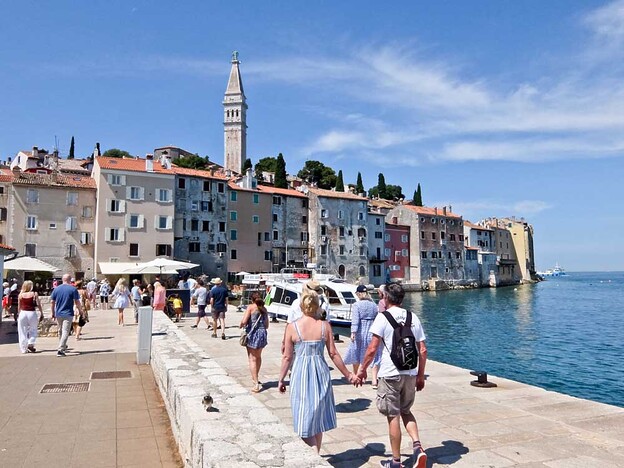
Rising dramatically from the Adriatic shoreline, Rovinj’s old town is a maze of narrow cobbled streets, painted walls and tiny squares. At its highest point stands the Church of St. Euphemia, whose bell tower dominates the skyline and offers spectacular views of the surrounding islands and coastline.
The waterfront promenade comes alive in the evenings as visitors gather at cafés and restaurants to watch the sunset. Fishing boats bob gently in the harbour while locals and tourists mingle among art galleries and boutique shops.
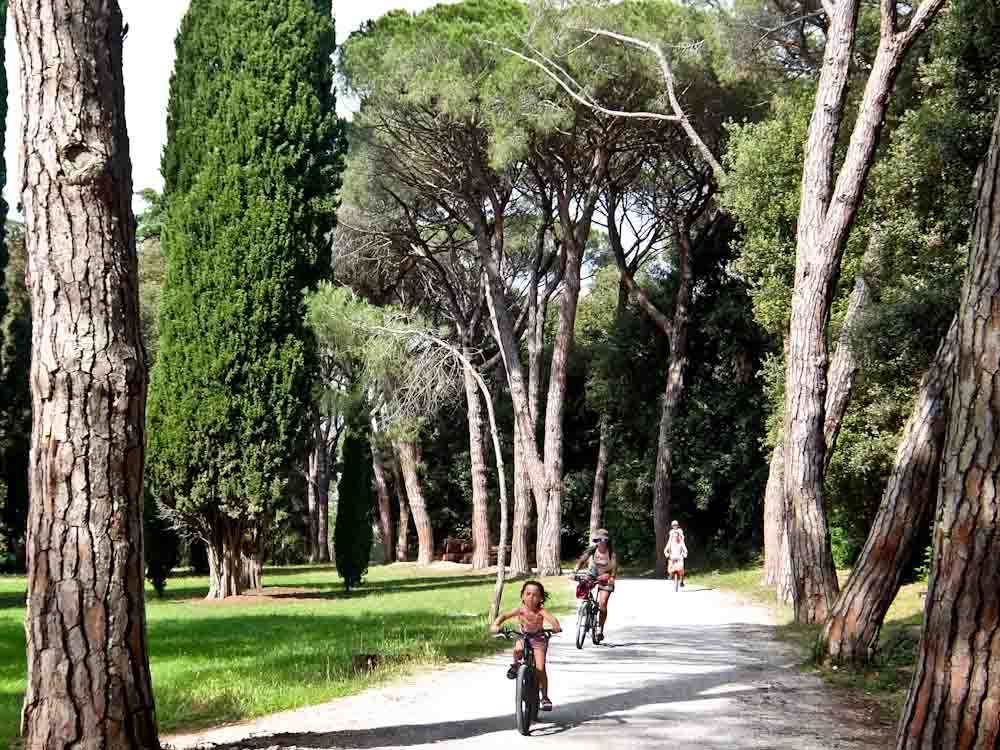
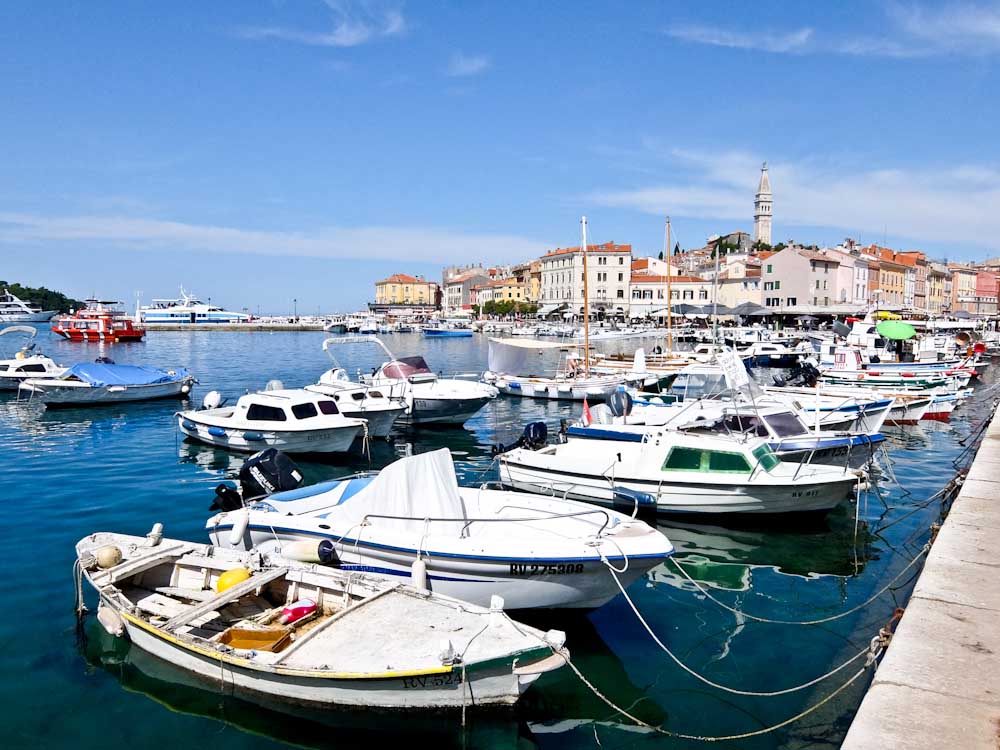
Just south of the old town lies Golden Cape Forest Park, known locally as Zlatni Rt. Shaded by pine trees, cypress groves and Mediterranean vegetation, an e-bike is the perfect way to explore its network of paths. Think rocky coves and crystal-clear swimming spots, no better place for a cooling dip.
Fažana
Just a short drive north of Rovinj lies Fažana, a small fishing village that’s retained its authentic maritime character. The waterfront is lined with fishing boats, seafood restaurants and palm trees swaying in the sea breeze.
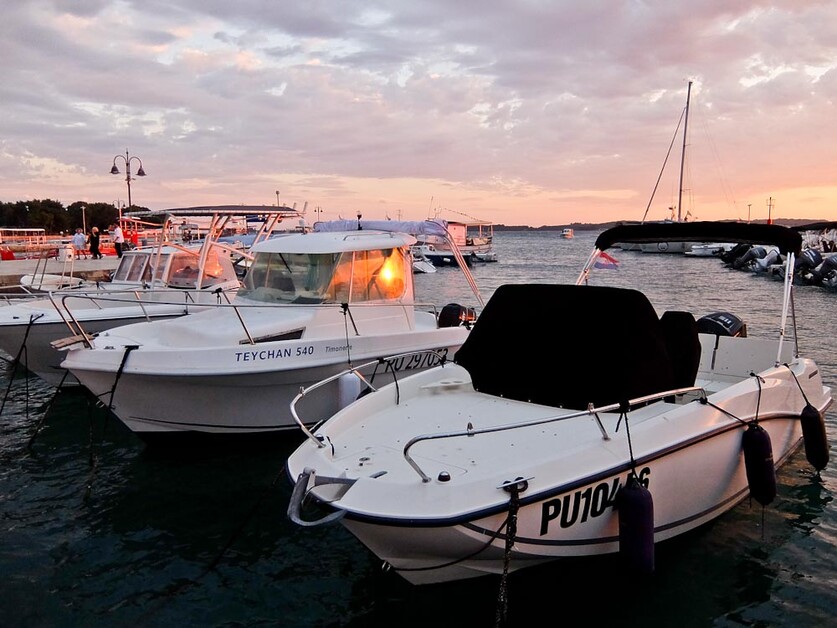
Stroll through the compact old town, enjoy fresh seafood caught daily by local fishermen or board a boat to explore the nearby islands of Brijuni. Busy during the day, it comes into its own when the day trippers have left, and you can quietly enjoy the glorious sunsets.
Vodnjan
A few kilometres inland, the town of Vodnjan reveals another side of Istria. Known for its medieval architecture and rich cultural heritage, Vodnjan is a fascinating destination. Its narrow stone streets wind through a historic centre filled with colourful buildings, hidden courtyards and centuries-old churches.
One of these is the Church of St. Blaise, home to a remarkable collection of sacred relics including mummified saints. These “Mummies of Vodnjan,” have lasted for centuries without artificial embalming. They’re remarkably intact and, combined with the church’s impressive collection of relics and religious treasures, this is definitely worth a detour.
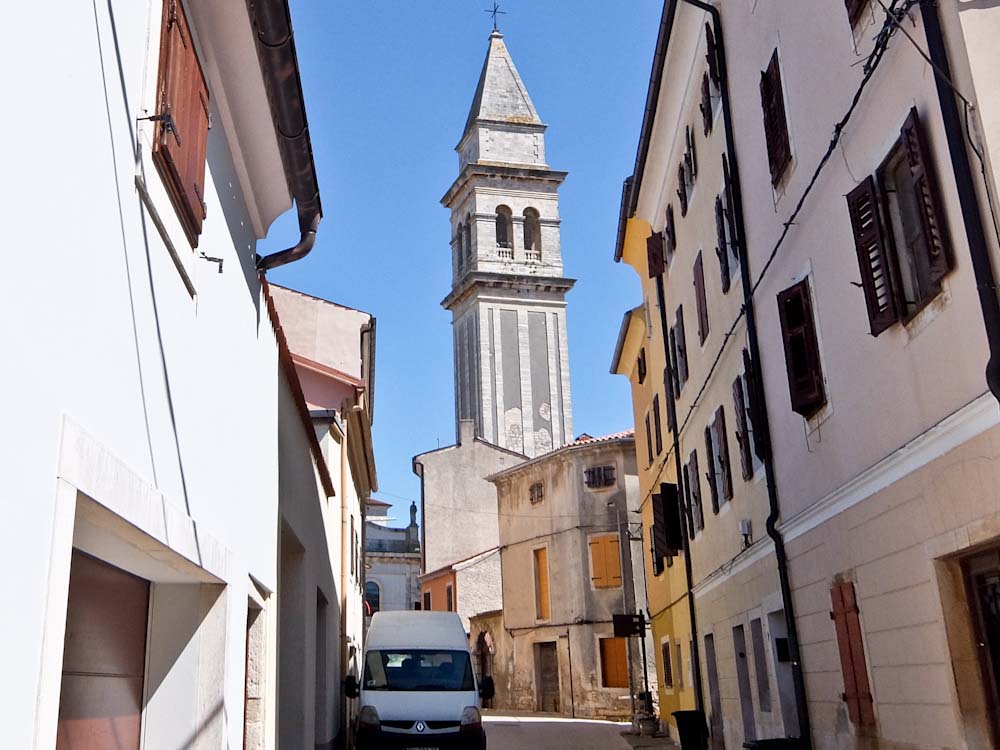
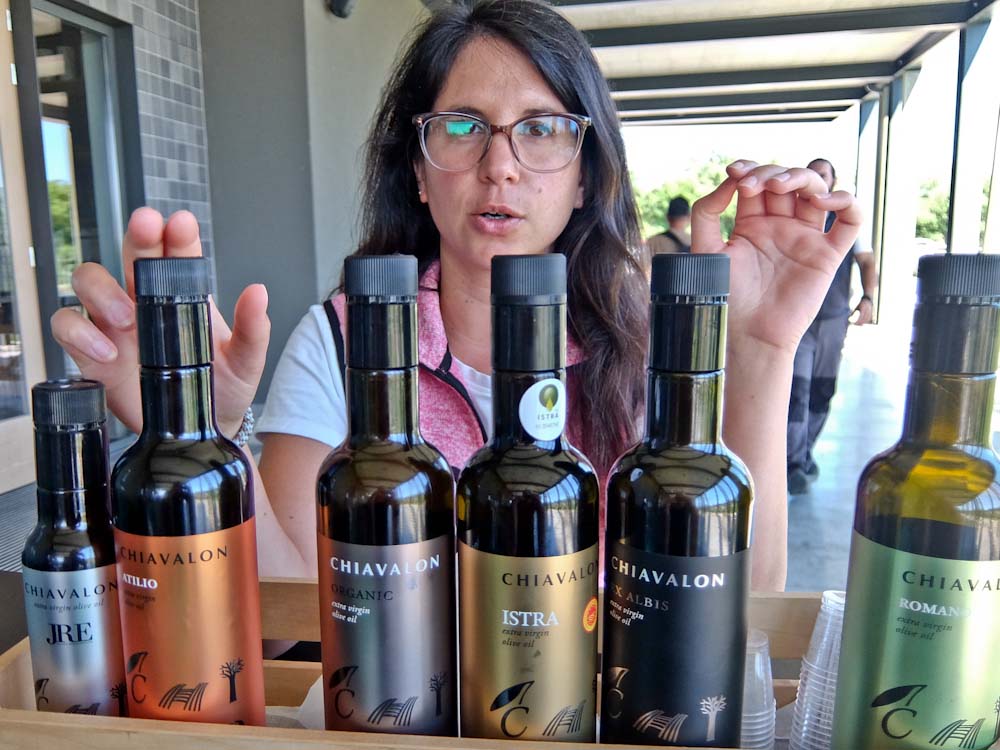
Just outside the town is the Kažun theme park, a collection of traditional Istrian dry stone huts. These were used by farmers for shelter and in the surrounding area there are roughly 3.000 of them. The countryside here is home to thousands of olive trees, many of them centuries old. The soil and micro climate means that the olive oil is of exceptional quality, renowned for its vibrant green colour, peppery finish and complex aromas.
A good place for tasting is Chiavalon, a family-run olive estate that has become one of Croatia’s most celebrated producers of premium extra virgin olive oil. Warming a tiny glass of it in my hands sends the delightful aromas into my nose. Then a small sip and I draw air gently through my mouth. This technique reveals layers of flavour, and every blend is distinct.
Motovun
For food lovers, however, olive oil is only half the story. Istria is equally renowned for its truffles, particularly the highly prized white truffle that grows in the forests of the Mirna river valley. Perched high above, Motovun is one of Istria’s most iconic hilltop towns and seems frozen in time. With its medieval walls intact, the town commands breath-taking views of vineyards, forests and farmland stretching as far as the eye can see.
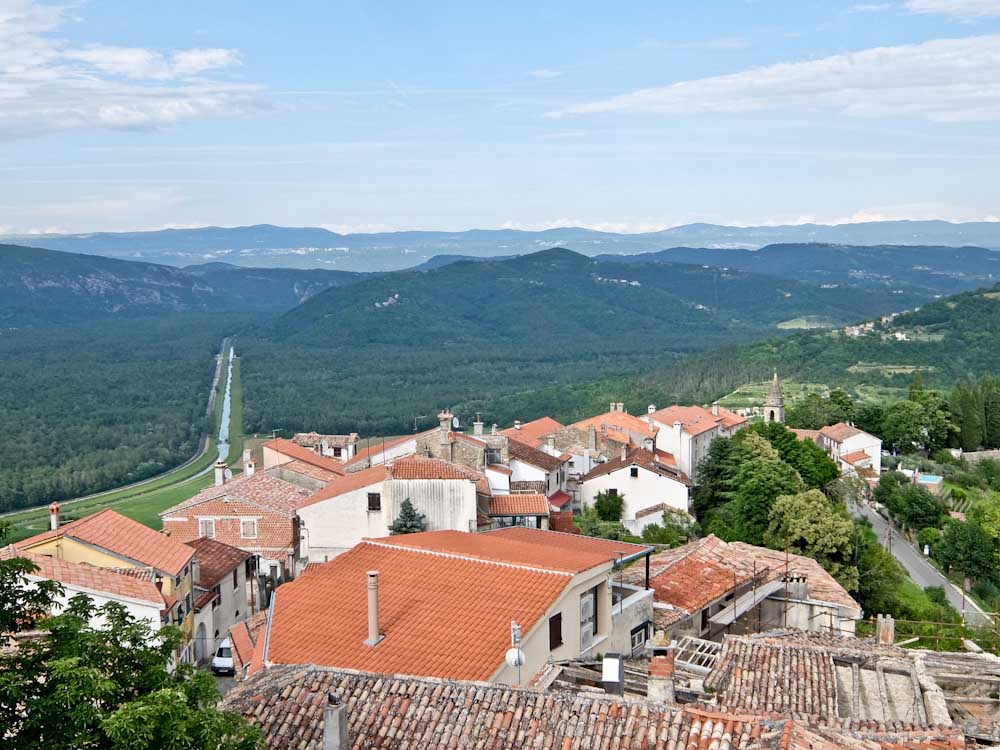
Yet beyond its visual appeal, the town serves as a gateway to the region’s celebrated food culture. The forests surrounding Motovun are among the most productive truffle areas in Europe, while nearby vineyards produce excellent wines such as Malvasia and Teran.
Buzet
At the centre of this gastronomic heritage stands Buzet, often called the “City of Truffles.” The town overlooks dense forests where truffle hunters and their trained dogs search for these elusive delicacies. Nearby, in the tiny village of Paladini, at Karlić Truffles, is where I’m on my truffle hunt. After the first exciting find, we go on to find a few more and then retreat to the farmhouse for an unforgettable tasting.
Simple dishes allow their earthy aroma to shine – bread and local cheeses followed by scrambled eggs, all with generous shavings of truffle. I’m tasting the black variety but later in the season, the rarer white ones are also found here. This is truffle gold and attracts chefs and food enthusiasts from all over the world.
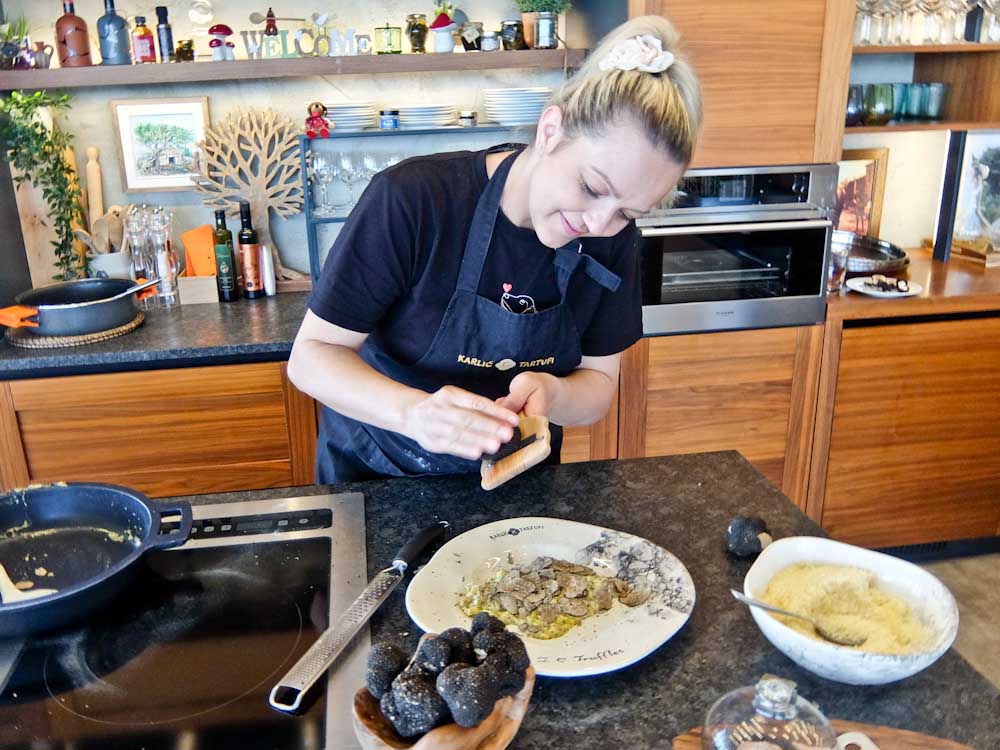
The combination of truffles, wine and olive oil has transformed Istria into a culinary destination of international significance. Here you can enjoy tasting menus that really do showcase local ingredients, paired with wines produced just a few kilometres away. Hire a car and overnight in different villages. That way you don’t have to navigate the narrow roads after a glass or two of the excellent wine.
Tell Me More About Insider Guide To Istria, Croatia
Jet2 flies direct from London Stansted to Pula.
Agency Aries in Rovinj rents bikes.
Istra has information about the region.
Croatia Full of Life has information about the country.
Hotel La Grisa makes a good base in Bale and has an excellent restaurant.
Hotel Viletta Phasiana is right by the sea in Fažana, perfect for a sundowner.
Stara Konoba in Fažana has good seafood.
Restaurant Borghetto in Bale has a set menus of meat or fish in a beautifully restored house and garden.
Meneghetti Wine Hotel & Winery in Bale has Michelin dining with wine and olive oil degustations.
Locanda Blu by the beach outside Rovinj serves creative and inventive dishes.
Hotel Vela Vrata serves excellent dishes using local produce in Buzet.
Tavern Mondo in Motovun has many truffle dishes.
Chiavalon Estate offers tours and olive oil tastings near Vodnjan.
Karlic Tartufi has small group truffle experiences with lunch.


