In his guide to Saxony, Andy Mossack visits Chemnitz, Zwickau and Leipzig, and fulfils a boyhood dream at Colditz Castle.
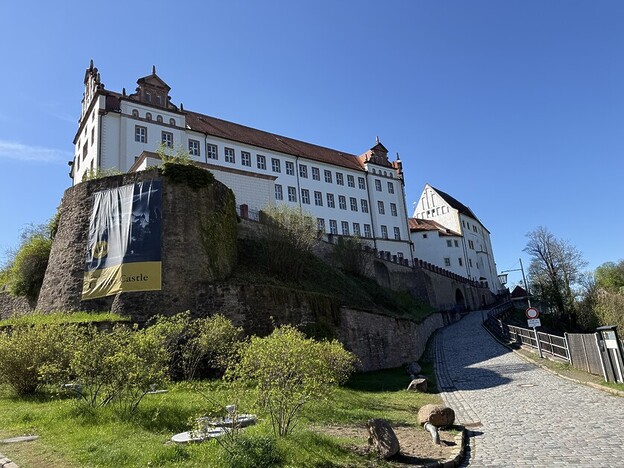
I’m in Colditz Castle, the infamous wartime senior officers’ prison, staring at the exit hole of the famous French escape tunnel in the castle’s wine cellar. Rather ironic the French chose the wine cellar as their exit route I thought to myself. Wine aside, it was an extraordinary feat taking some 9 months to complete the 44-metre-long tunnel from the ventilation shaft in the Bell Tower. The rubble around the inside of the narrow tunnel still visible.
There’s no doubting I’m having a moment. A realisation of a long-awaited boyhood dream ever since I was obsessed with the 70s BBC television drama series Escape From Colditz. And escaping was what made it so famous with over 300 ingenious attempts.
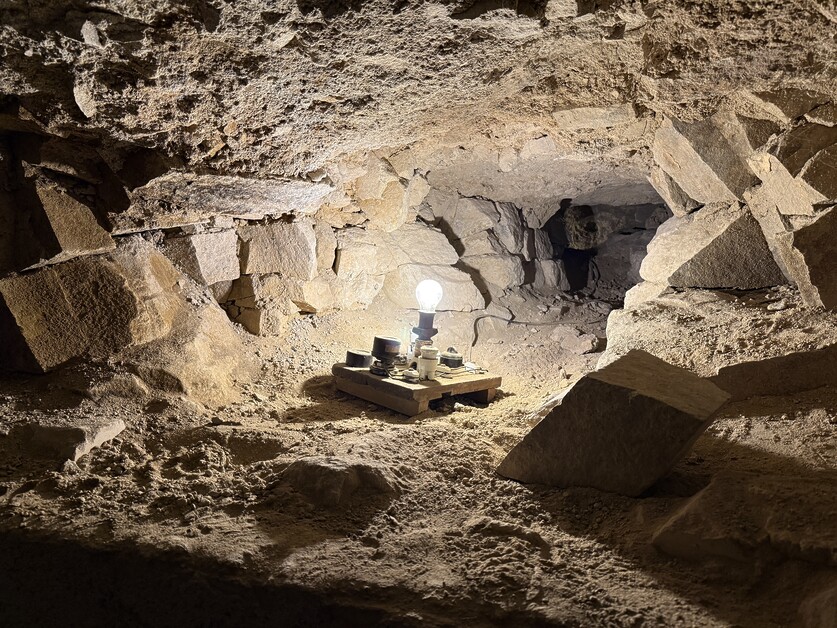
Colditz Castle was just one of the highlights of a memorable trip to a side of Saxony that, with the exception of Leipzig, offers tourists a far less-trodden path through a region which played such a key role in the former East Germany. And one which well deserves its own shop window with some quite extraordinary places to visit.
Chemnitz – the Manchester of Saxony
The enormous bronze Karl Marx monument grumpily perched by the side of Brückenstraße, one of the city’s main arteries, might seem a little odd until you find out Chemnitz was renamed Karl Marx Stadt in 1952 during the Socialist GDR era. It was changed back in 1990 after the fall of the GDR. Ironically Karl’s now a city landmark and an Instagram poster boy with legions of tourists flocking to see him, particularly with Chemnitz enjoying something of a renaissance following it’s crowning as European Capital of Culture through 2025. I must admit to being a little cynical of this movement in the past, but there is no denying it has been hugely transformative for this city.
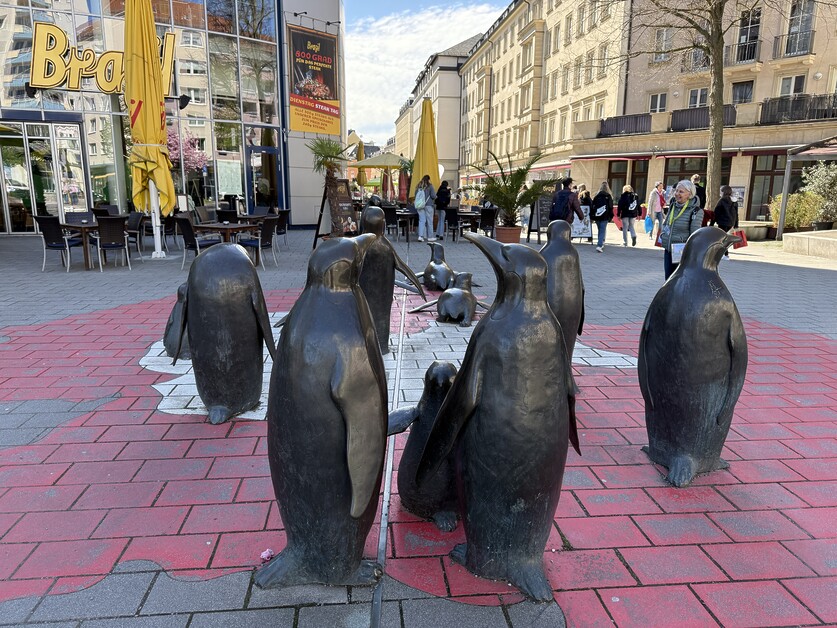
A once dreary industrial metropolis, albeit with a long history of textile production and manufacturing, Chemnitz has been utterly reborn. The streets are spotless, transport around the city is excellent, plenty of helpful information signs in both German and English, and long-abandoned factories have been repurposed into luxury apartments and fancy restaurants. There’s a growing giant mural scene, a Purple Path art, culture and sculpture trail and some excellent historical sights.
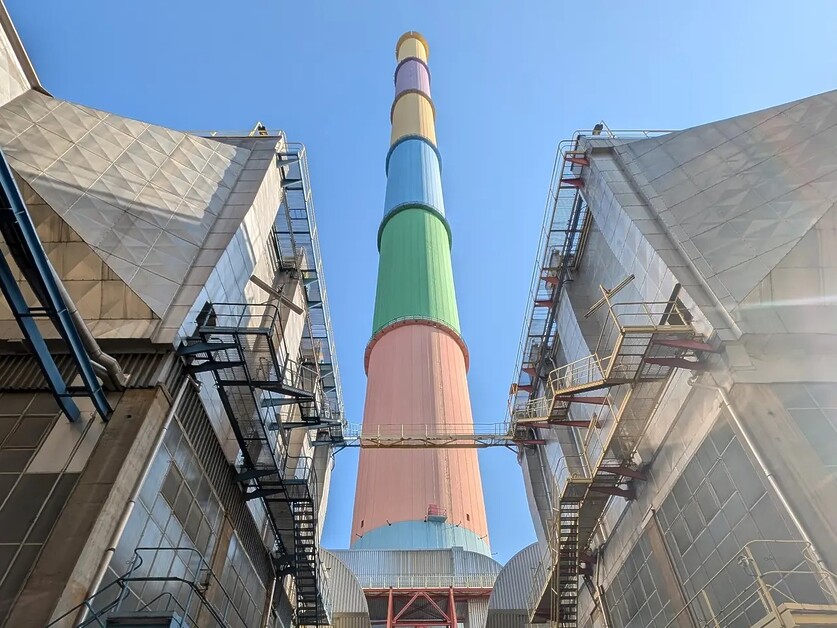
C the Unseen was the perfect slogan for Chemnitz’s Capital of Culture year and I was looking to see as much of its unseen as possible. Aside from Bunte Esse that is, the city’s 300-metre-high power station chimney – nicknamed lulatsch – which means beanpole – and is said to be the tallest artwork in the world, a multi-coloured totem you can spot from anywhere in the city. Particularly resplendent at night.
Industriemuseum Chemnitz
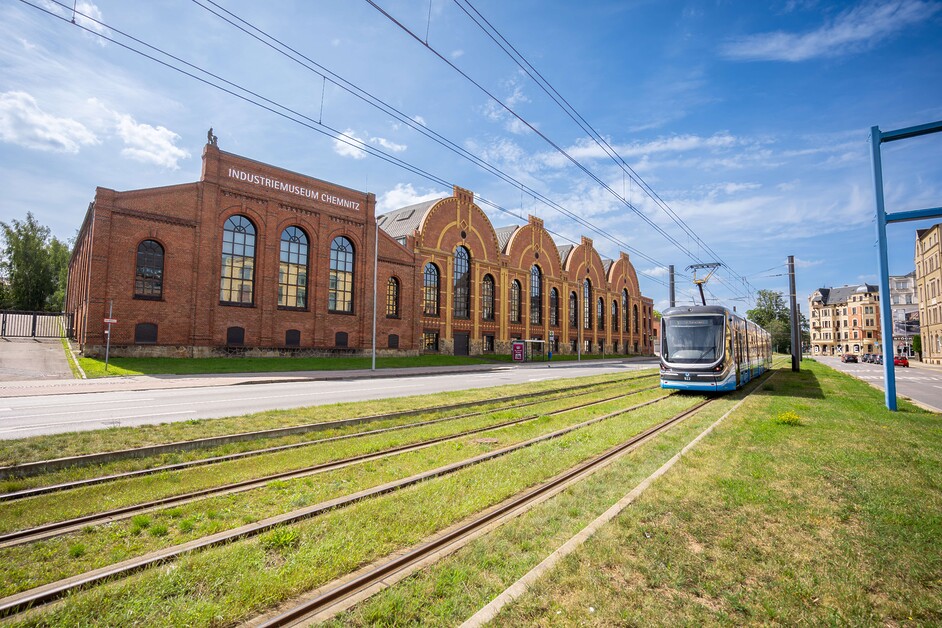
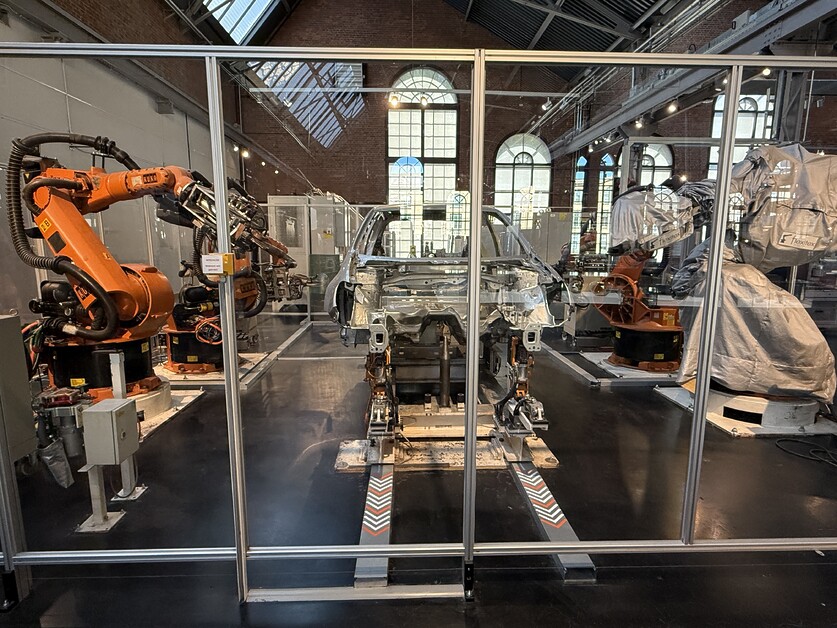
With such a storied industrial past, this spectacular museum perfectly describes the sheer scale and importance of Chemnitz’s industrial and textile history. Set inside a vast former foundry and mechanical engineering factory dating back to 1907, this extraordinary collection celebrates over 300 years of Saxony industrial heritage. Inventions and technology that literally changed the world forever: from steam engines and vehicles to robot welding and an automated road crossing system. There are many exhibits that are working historical machines, particularly in the basement where the entire space is devoted to Chemnitz’s automated textile industry with countless examples of spinning, knitting, and weaving machines, earning it the nickname of the Manchester of Saxony.
There’s also plenty of hands-on exhibits for kids to play with. Utterly brilliant.
Stadtbad Public Baths
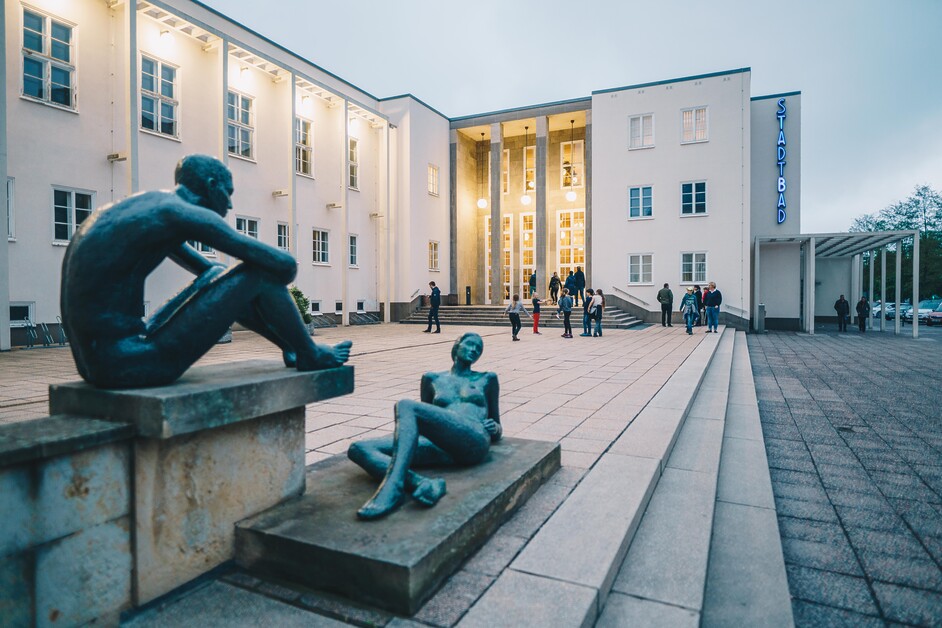
You wouldn’t normally imagine a local swimming pool to be high on the tourist radar, but this one is the exception. Built in 1927 it is something of an architectural marvel, designed in the Bauhaus style by famed architect Fritz Weber the indoor pool, at 50 metres, was for years the biggest in Europe.
Kaßberg Prison
Perched on one of the city’s highest points is the Kaßberg neighbourhood, one of the wealthiest in the city. Bizarrely, amongst all this expensive art nouveau architecture, you’ll find what’s left of an infamous prison, one the darker sights perhaps, but well worth visiting,
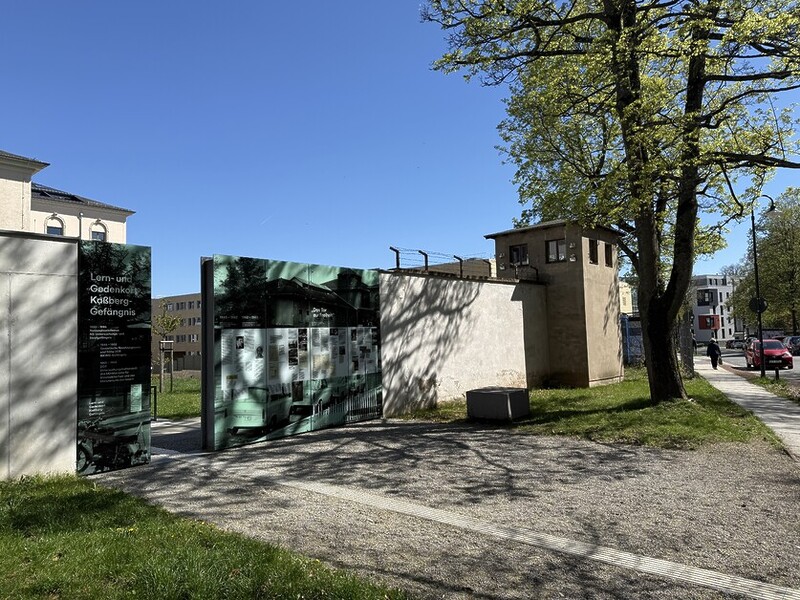
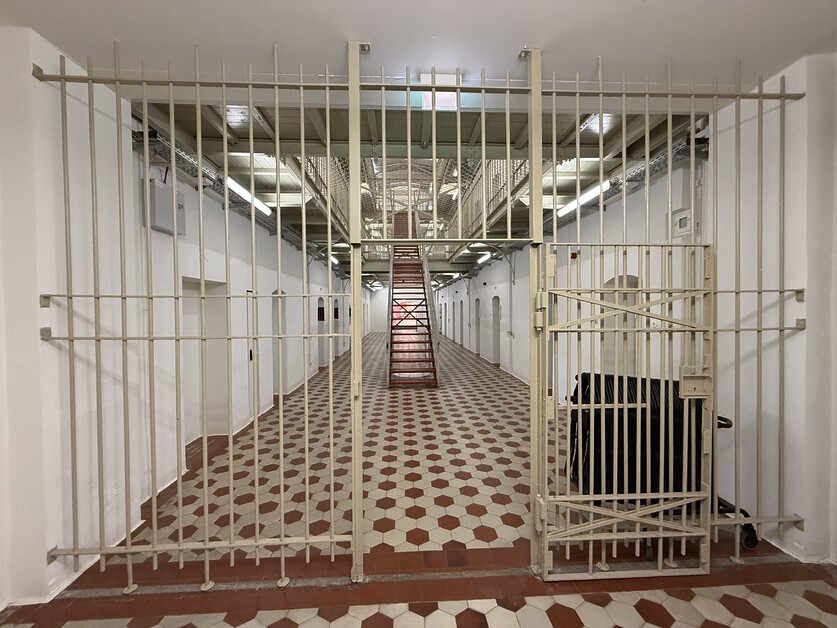
Kaßberg Prison was used by the Nazis, the Red Army and the GDR as a detention centre, in the main for political prisoners and persecution of Jews, but also for famously ransoming over 33,000 inmates across to West Germany during 1966/67. Following its closure in 2010 most of the site was redeveloped into high-end apartments, but what was the former B wing was saved and in 2023 turned into a fascinating memorial for learning and remembrance.
The exhibition space across 3 floors of prison cells chronicles biographical accounts from prisoners interred in these cells and in-depth information about political persecution. Highly recommended.
Schlossbergmuseum Chemnitz
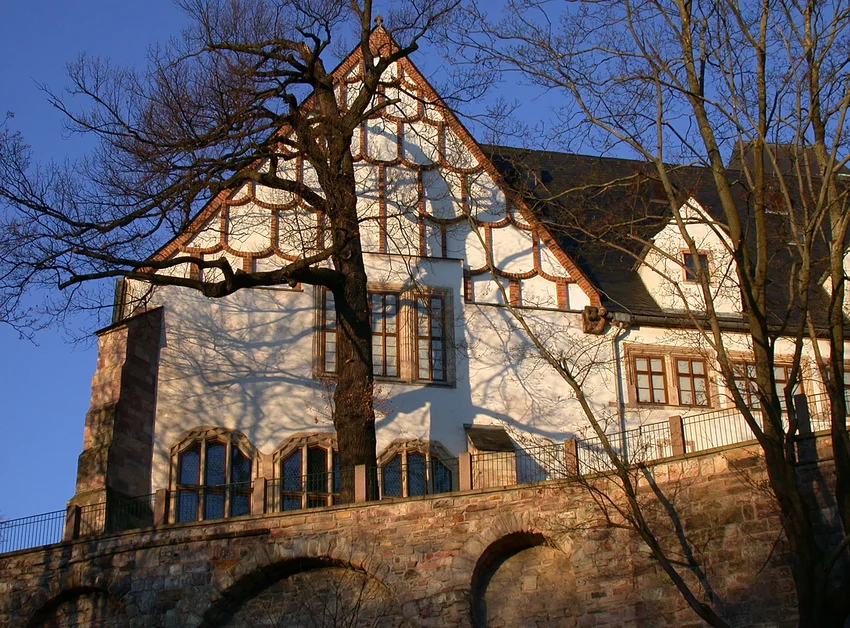
A short walk from the prison you can find yourself by one of the oldest buildings Chemnitz. A former Benedictine monastery which is where the city was founded. It’s a beautiful green space looking down to Schloßteich Park, once the monastery lake which has a lovely walking trail all the way around it. The Schlossbergmuseum has an exhibition tracing the development of the settlement into the city today. When I was there it also had a special photo exhibition on European Mikvehs – Jewish ritual baths. This is part of Tacheles 2026, the year-long celebration of Jewish culture in Saxony.
Zwickau and the August Horch Museum.
Zwickau’s claim to fame as Robert Schumann’s birthplace is well documented and continues to draw music lovers from all over the world. But for petrol heads this small city is almost reverential. A certain August Horch was the local engineering genius behind its famous automotive production heritage that began in 1904 and lasted for 120 years.
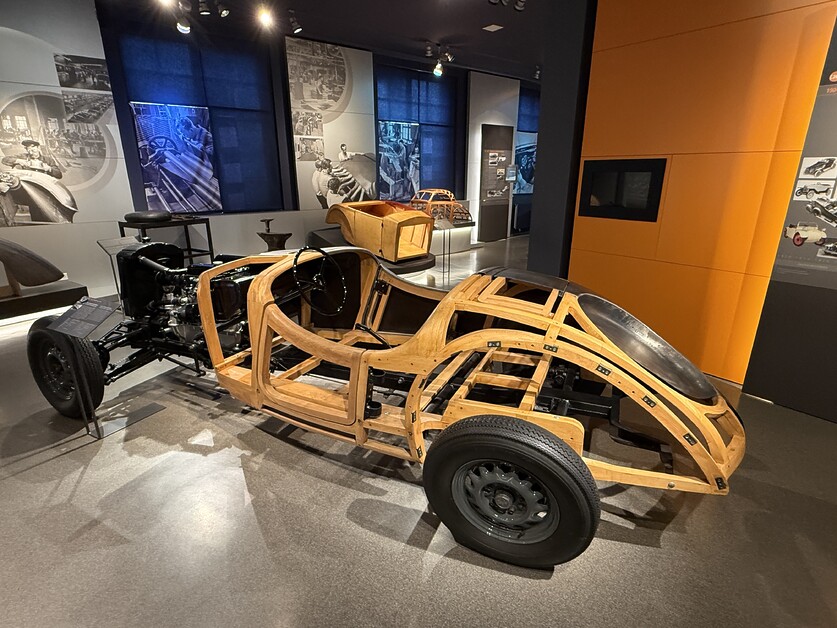
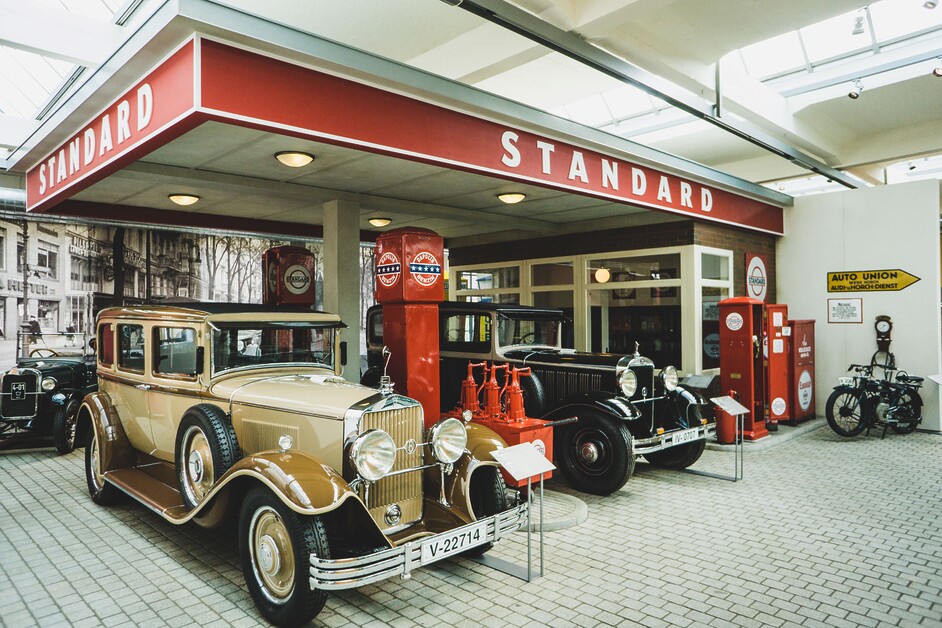
Therefore, a pilgrimage to the magnificent August Horch Museum is a dream come true for anyone interested in automotive history. Horch was the founder of Horch luxury cars and Audi, and the man who realised investing in winning car races was the best way to market his cars to the public. Housed inside the former Audi factory, the museum is stacked with engines and classic cars from Horch, Audi, Auto Union and Trabant and takes visitors on a jaw dropping journey around how car production evolved together with Horch’s own life story.
By the way, the restaurant is also not to be missed. Well worth a pit stop!
Leipzig
Leipzig’s storied past is well documented. A city where music, culture and creativity seeps from every nook and cranny, inspiring Bach and Mendelssohn and a host of musicians, authors and artists ever since. But it’s position, right at the crossroads of Europe’s major trade routes, made it a natural meeting point for traders and trade fairs stretching back centuries ensuring the city’s wealth and broad exchange of cultures. Political knowledge has never been a stranger here. Small wonder the city played such a crucial role in the German Reformation, and much later, the Peaceful Revolution on November 9th 1989.
Salon de Musique
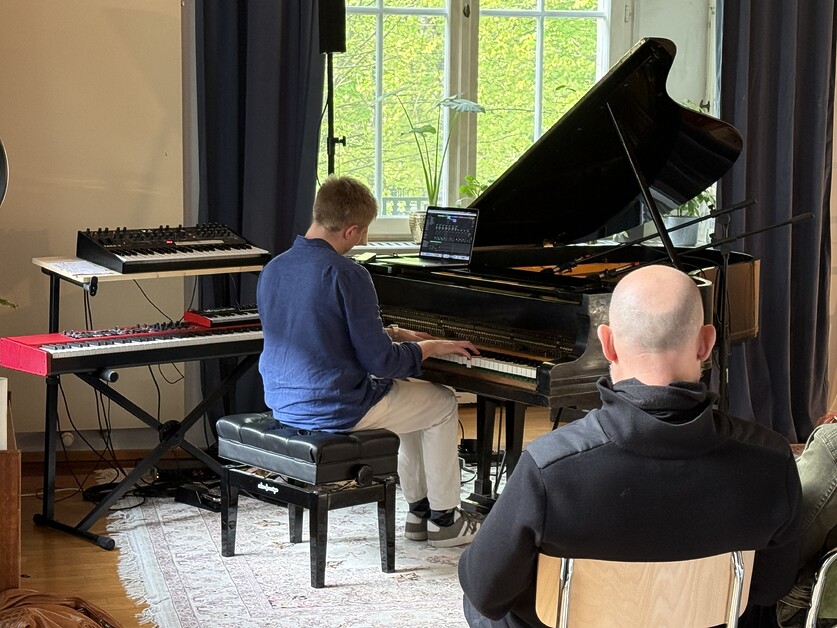
This is an excellent example of Leipzig’s musical heritage: an intimate musical recital at a secret venue! The Salon address turned out to be a room in a large house just a 10-minute tram ride from the city centre. On my visit, it was to hear an emerging young pianist Johannes Wasikowski, who mashed electronic ambient sound with classical and jazz-like piano. Clearly classically trained, his compositions were otherworldly and haunting – yet beautifully hypnotic. Dare I say Herr Bach might well have tried a duet given half a chance.
The Mendelssohn Museum
While we’re on the subject of music, this museum is not to be missed. It resides across three floors. Felix Mendelssohn’s family home, a first-floor apartment where he spent almost the last three years of his life. A home often visited by many celebrities of the time. The next floor up is dedicated to his older sister Fanny Hensel, herself an accomplished composer and musician, who in her early life was never allowed the recognition she deserved because she was a woman. As a result, many of her early compositions had to be attributed to Felix to be published.

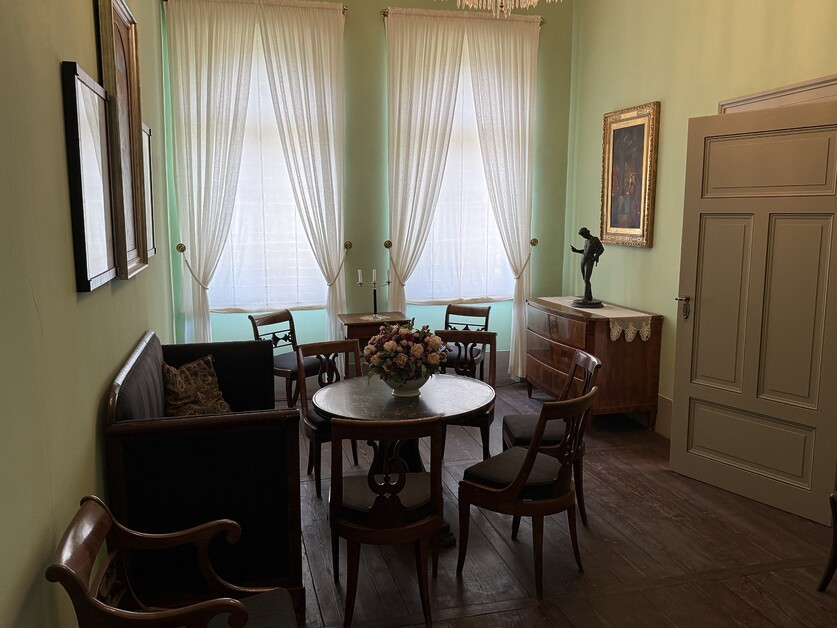
The museum offers an exceptional dive into the life of the Mendelssohns with original family furniture, personal items and watercolours. There is also a concert in the large music salon every Sunday at 11am. I would recommend taking the guided tour which offers invaluable insight into the musical genius of both siblings.
The Effektorium on the ground floor gave me a memorable moment. Putting you in the conductor’s position in front of thirteen vertical speakers representing a virtual orchestra, you can listen to compositions from Mendelssohn’s entire body of work interpreted by many different conductors in sensational sound quality and bathed in colour. You can read the sheet music as it plays out, change the tempo or even single out individual instruments. Genius.
Leipzig Music Trail and Music Arc
Curved stainless-steel inserts along the pavement are your first clues. The information boards accompanying them are another. This 5-kilometre trail links 23 of the most important music locations in the city where famous composers lived and worked and the inserts represent the weaving ribbon from Robert Schumann’s Er ist’s a poem by Eduard Mörike that he set to music. The music trail is also supported by a free app which plays the relevant music of the composer’s location you’re approaching.
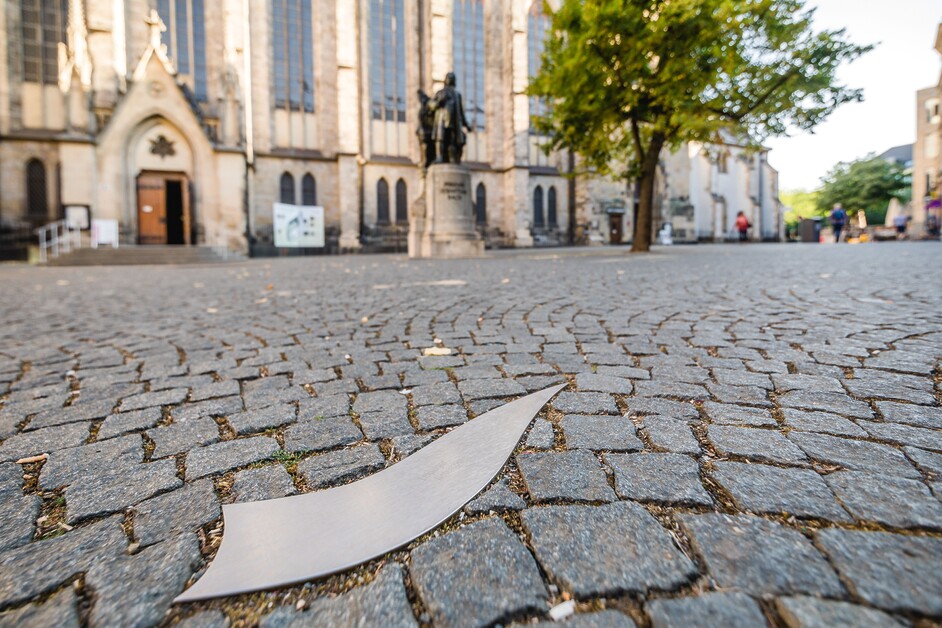
New from June 2026 is the new urban music route: Leipzig Music Arc. Extending the music trail north from the city centre. Comprising of 13 of a planned 19 stations the Northern Route focusses on the contribution of Jewish citizens to Leipzig’s musical and civic life. The southern section, with a further six stops, will follow in 2027.
St. Thomas Church
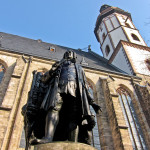
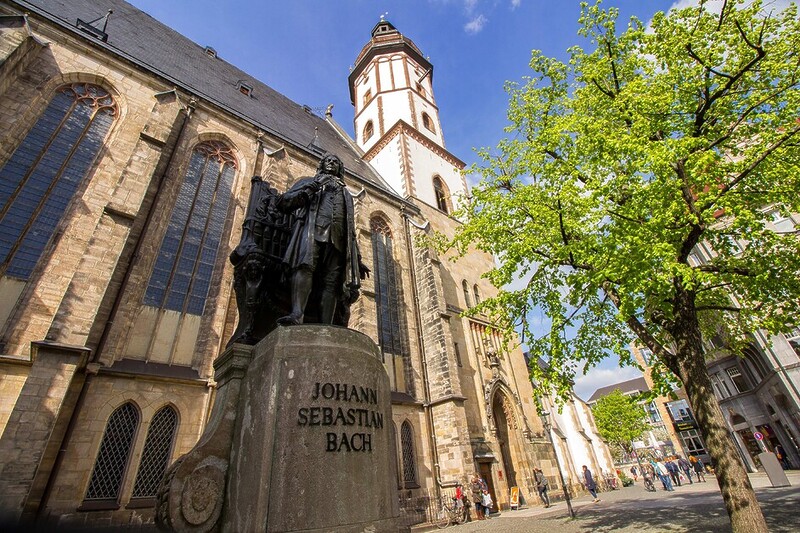
As my time in Leipzig drew to a close, I had to pay my respects to Johann Sebastian Bach who is buried in front of the Altar in St. Thomas church. He worked in the church as Cantor for 27 years and performed many of his compositions for the first time here, as did Mozart and Wagner. As I walked in the magnificent 2000 Woehl Pipe organ (known as the Bach organ) suddenly sprang to life almost serendipitously, filling the cavernous church with music. It was a very fitting way to bid farewell to a musical genius.
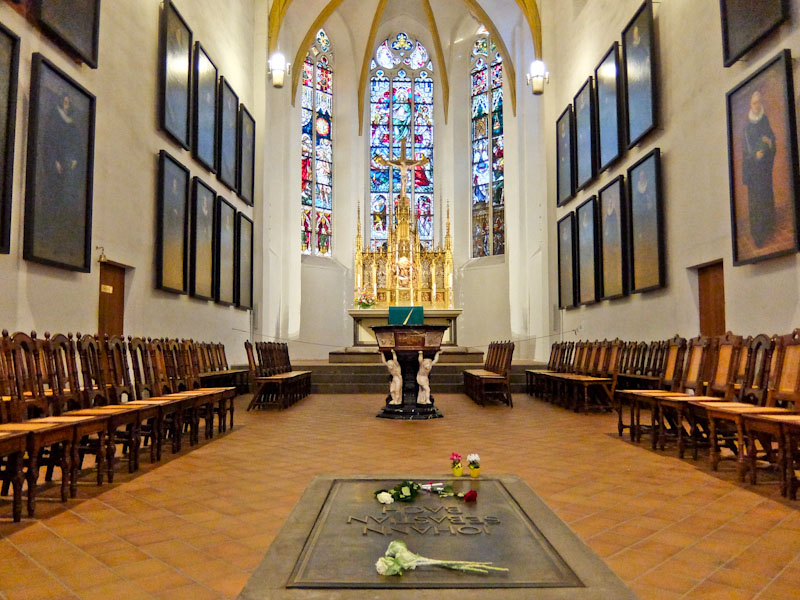
Just opposite the church is the Bach Museum which chronicles his life and work through 12 rooms including original manuscripts and other precious items.
City Harbour
This summer marks the opening of Leipzig’s city harbour, the new centrepiece of Leipzig’s extensive network of waterways. From here, you will be able to explore the city by canoe, moving past former industrial architecture and into the protected riverside forest and eventually reach Lake Cospuden.
Colditz Castle Museum
Which brings us rather nicely back to my boyhood dream destination. Built almost 1,000 years ago, Colditz Castle the infamous WW2 officers’ prison and now a museum, lies in-between Leipzig and Chemnitz and is perched on a hilltop overlooking the town of Colditz.
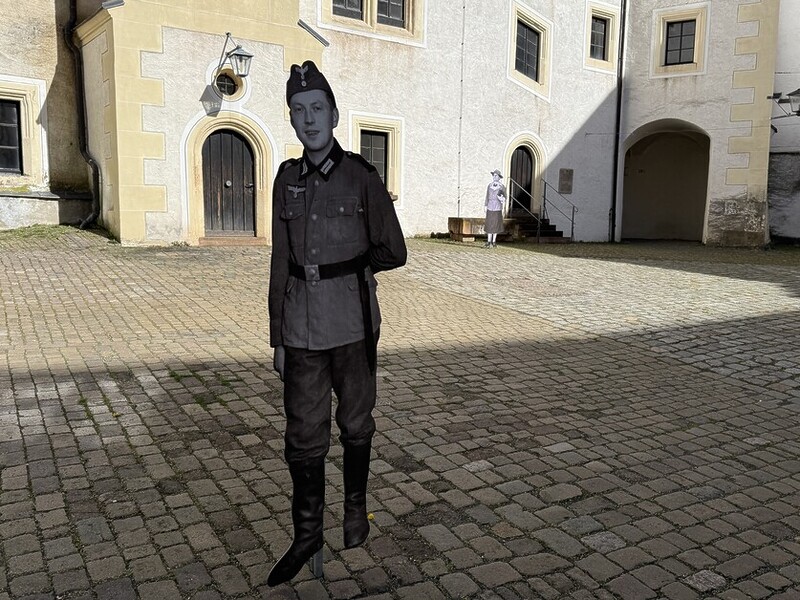
In 2024 the museum launched a new interactive tour incorporating state of the art HistoPads: tablets loaded with augmented reality scenes relating to the rooms you visit, 3D animations and plenty of archive photos. It’s all intended to fully immerse you into a prison world where over 300 escapes were attempted 33 of which were successful.
The ingenuity of the prisoners was extraordinary, and remarkably, many of their attempts at tunnelling and forging fake documents and uniforms remain for us to see today.

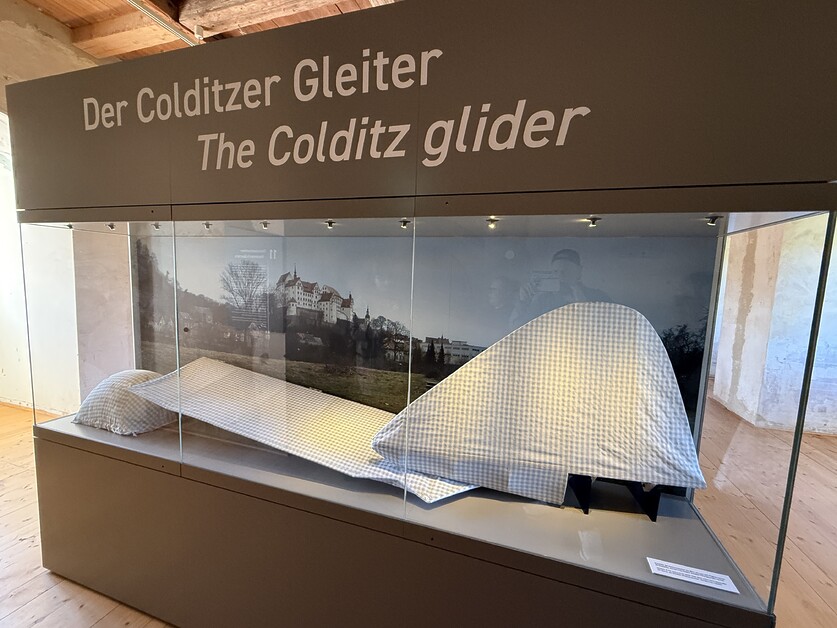
Probably their most famous exploit was to build a glider made from bed sheets, porridge glue and pieces of wood and fly it off from the castle’s highest tower using an iron bath flung off the tower to generate the lift off power. Sadly, the plan was discovered before they could finish it. However, a documentary film was made ten years ago when a team made a glider at Colditz from the original drawings by Bill Goldfinch and Jack Best to test if their theory could work. I won’t spoil the ending for you.
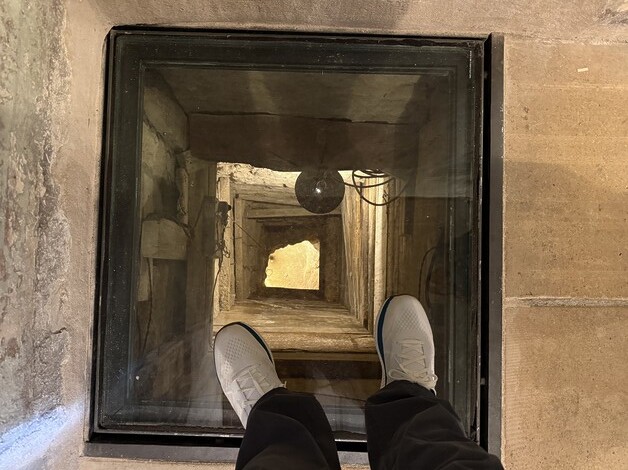
The whole experience for me at Colditz exceeded my expectations. This was no Disney recreation. Listening to the stories and standing where these escape attempts actually took place was authentic, chilling and a total thrill.
Tacheles 2026. Saxony Celebrates a Year of Jewish Culture.
Saxony is celebrating a state-wide “Year of Jewish Culture” through 2026 which includes many events in Chemnitz and Leipzig. It focuses on Jewish culture, Jewish-Saxon history and Jewish life today. There are projects, events and exhibitions as well as a focus on Jewish life in Saxony, their contribution to the past and present but also their losses. Much of Chemnitz’s industrial past was driven by Jewish entrepreneurs, as was Leipzig’s musical heritage and trading.
For more information, please visit Tacheles 2026
Images (C) Andy Mossack, Kopie,Ernest Ouhlmann, Visit Chemnitz, Tom Williger, Oliver Göhler, Philipp Kirschner.
Tell me more about Chemnitz, Zwickau and Leipzig
More information on all the places featured here can be found at Visit Saxony, Leipzig Tourism, and Visit Chemnitz
Colditz Castle Tour Entry prices from €10.
August Horch Museum Zwickau Entry prices from €15.
The Mendelssohn Museum Entry prices €10.
Salon de Musique Donation €10
Industriemuseum Chemnitz Admission from €25
Kaßberg Prison Open Wednesday to Sunday 10 am – 5 pm.
Recommended Hotels
Townhouse Hotel Leipzig. Beautiful boutique hotel right opposite St Thomas Church.
Hotel Chemnitzerhof Chemnitz. Legendary Grande Dame adjacent to the Opera House and the station.
Recommended Restaurants
Auerbachs Keller Leipzig: A legendary vaulted cellar restaurant in the historic Madler Passage. Immortalised in a scene in Faust, as Goethe was regular guest.
Nomad Chemnitz. An excellent chain of deli bakeries in Chemnitz. Fantastic freshly baked bread and pastries.
Getting to Leipzig
Lufthansa operates regular flights to Leipzig via Frankfurt.
Airport Parking
Airport Parking and Hotels (APH) offers a wide range of parking and overnight hotel stays at all major UK airports. One week of Meet & Greet airport parking at London Heathrow costs from just £69.99. For the latest prices and to book, call 01342 859442